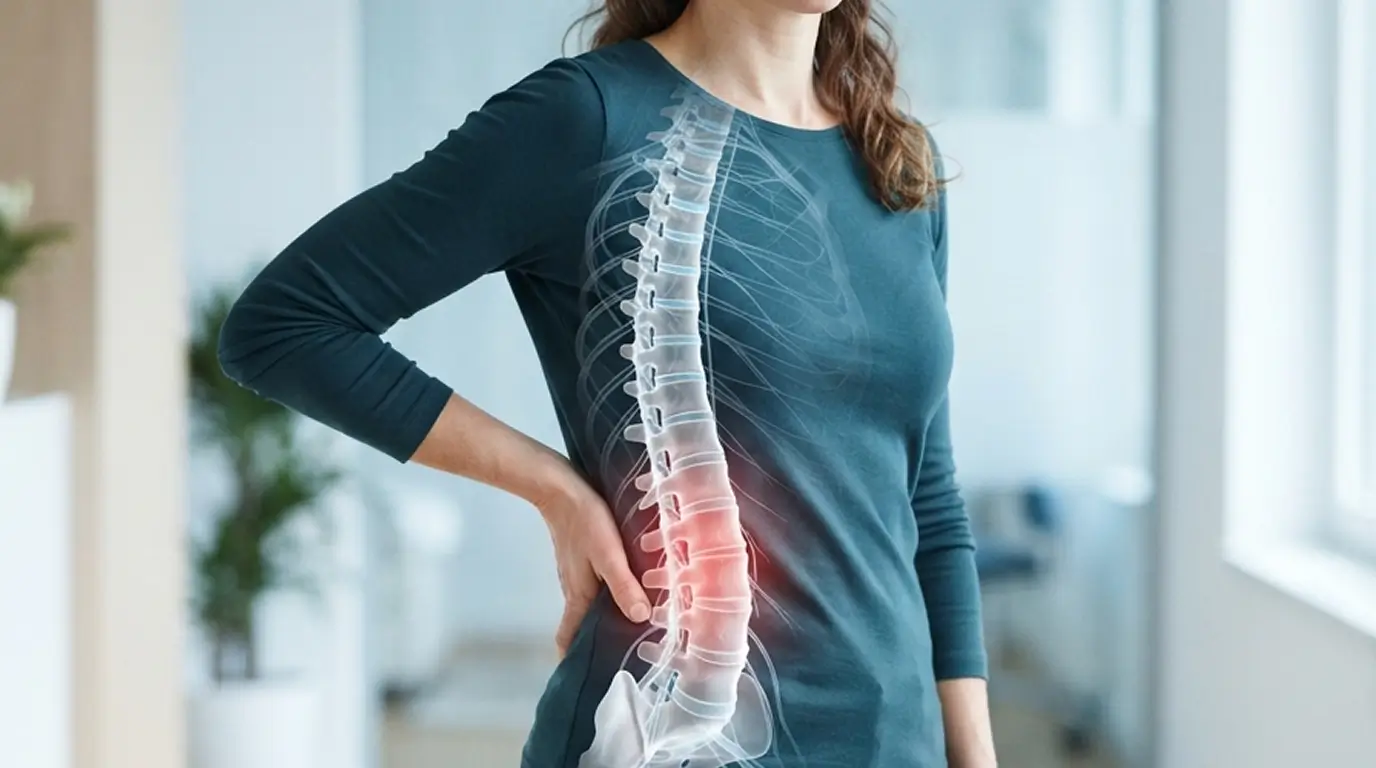

Pain on the side of the knee when bending can make everyday movements such as walking, climbing stairs, squatting, or getting up from a chair uncomfortable. While some side knee pain may be related to overuse or a minor strain, persistent pain can sometimes be linked to problems involving the meniscus, ligaments, tendons, or knee joint.
The exact cause of pain in the side of the knee can depend on where the pain occurs, what movements trigger it, whether there was an injury, and whether you have other symptoms such as swelling, stiffness, clicking, or instability.
In this guide, we’ll look at 7 possible causes of side of knee pain when bending, symptoms that may occur with each condition, and treatment options that may help. If your knee pain continues or interferes with daily activities, exploring knee pain management treatment in Washington may help identify the underlying cause and appropriate treatment options.
What Does “Side of the Knee” Mean?
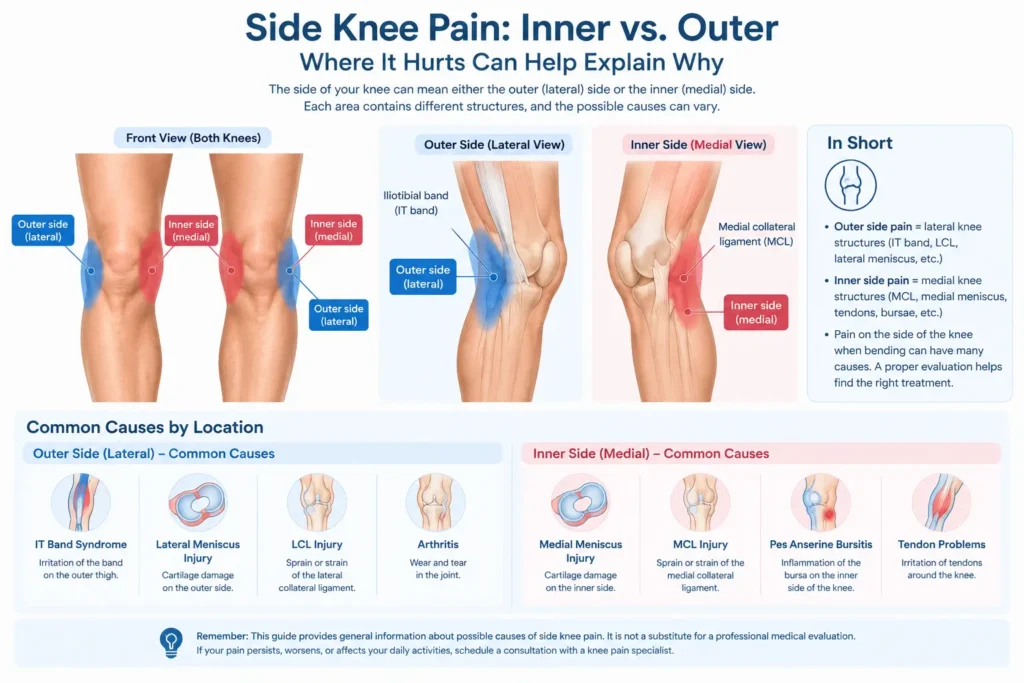
When people describe pain on side of knee, they may be referring to either the inner or outer side of the joint. These areas contain different muscles, tendons, ligaments, and other structures, so the location of your pain can provide an important clue about what may be causing it.
Pain on the Outside of the Knee
Pain on the outer side of the knee is sometimes called lateral knee pain. It can occur because of problems involving structures such as the iliotibial (IT) band, lateral meniscus, or lateral collateral ligament (LCL).
Pain on the Inside of the Knee
Pain on the inner side of the knee is sometimes called medial knee pain. Possible causes include problems involving the medial meniscus, medial collateral ligament (MCL), tendons, or bursae around the knee.
Because several conditions can cause pain on the side of the knee, the location alone cannot determine the exact cause. A healthcare professional may need to consider your symptoms, medical history, physical examination, and other tests when appropriate.
7 Possible Causes of Side Knee Pain When Bending
1. Meniscus Injury
The meniscus is a piece of cartilage that helps cushion and stabilize the knee. Each knee has two menisci, one on the inner side and one on the outer side.
A meniscus can become injured during activities that involve twisting, turning, or putting weight on a bent knee. It can also become more vulnerable to injury over time as the knee changes with age.
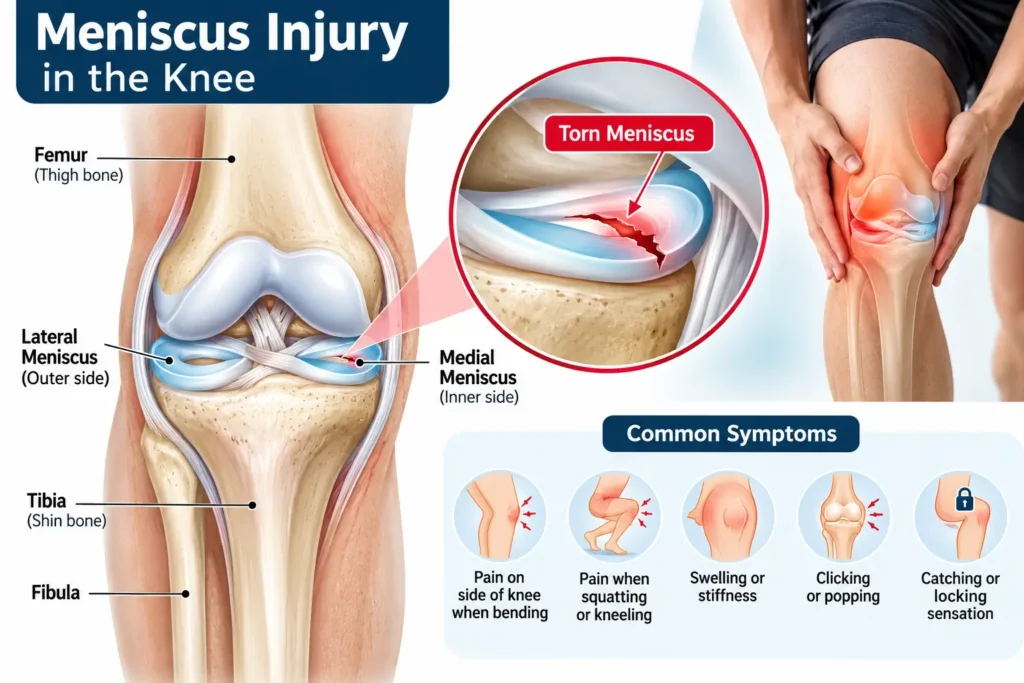
A meniscus problem may cause side knee pain when bending, along with symptoms such as:
- Pain when squatting or kneeling
- Swelling or stiffness
- Clicking or popping
- A catching or locking sensation
- Difficulty fully bending or straightening the knee
If you have pain on side of knee when bending after a twisting injury, a meniscus problem may be one of the conditions a doctor considers.
2. Iliotibial Band Syndrome
The iliotibial band, or IT band, is a strong band of tissue that runs along the outside of the thigh and connects near the knee.
Repeated activities such as running, cycling, or other movements that repeatedly bend and straighten the knee can irritate this tissue.
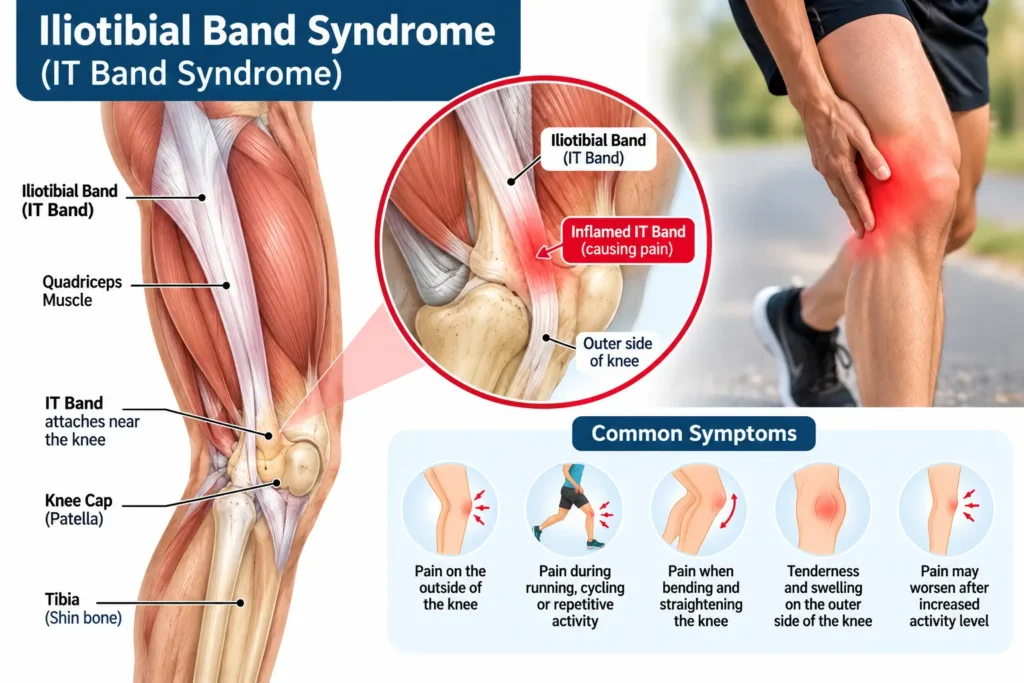
IT band syndrome commonly causes pain on the outside of the knee, particularly during repetitive activity. The pain may become more noticeable when repeatedly bending and straightening the knee.
People who develop this condition may describe the side of their knee hurts during exercise or after increasing their activity level.
3. Knee Osteoarthritis
Osteoarthritis occurs when the tissues within a joint gradually change over time. It can affect people differently and may cause pain, stiffness, swelling, or reduced movement.
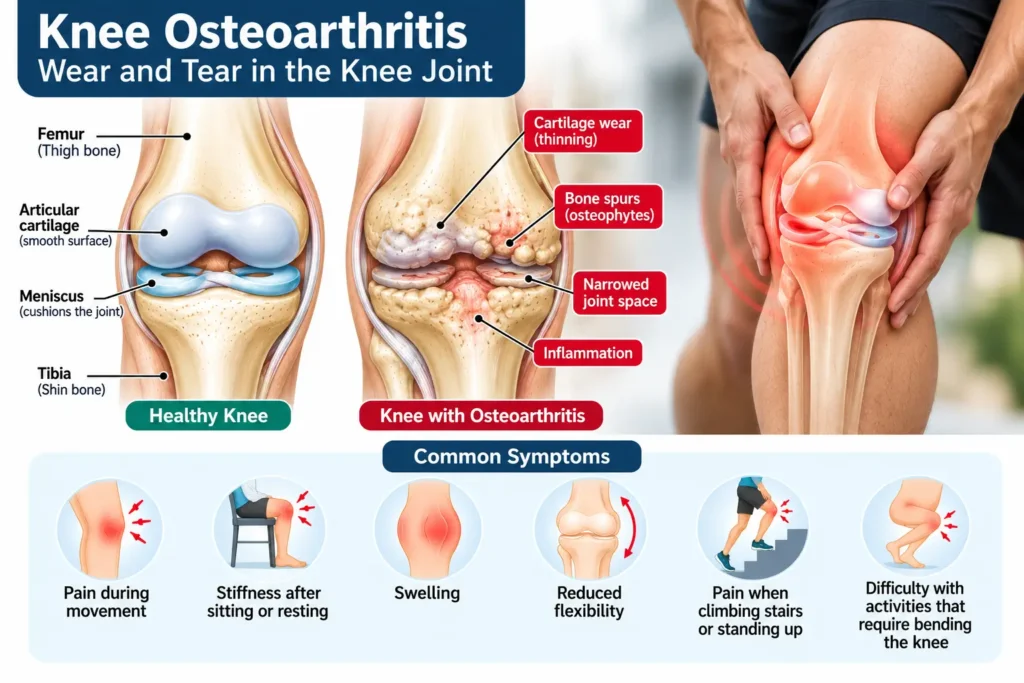
When osteoarthritis affects the knee, you may notice:
- Pain during movement
- Stiffness after sitting or resting
- Swelling
- Reduced flexibility
- Pain when climbing stairs or standing up
- Difficulty with activities that require bending the knee
If you have side of knee pain that has gradually developed rather than starting after one specific injury, osteoarthritis may be one possible cause.
4. MCL or LCL Injury
The medial collateral ligament (MCL) is located on the inner side of the knee, while the lateral collateral ligament (LCL) is located on the outer side.
These ligaments help provide stability to the knee. An injury can occur after a direct impact, sudden change in direction, twisting movement, or sports-related accident.
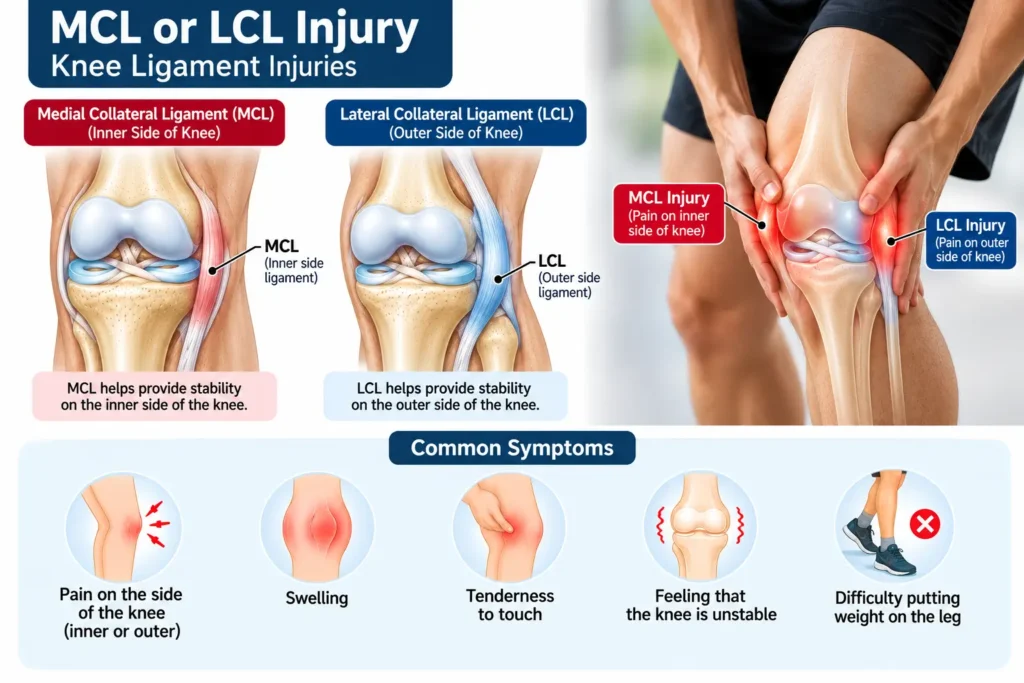
Depending on which ligament is affected, you may experience pain on the side of the knee, swelling, tenderness, or a feeling that the knee is unstable.
A significant ligament injury should be evaluated by a healthcare professional, particularly if you have difficulty putting weight on the leg.
5. Tendon or Bursitis Problems
Tendons connect muscles to bones, while bursae are small fluid-filled sacs that help reduce friction around joints.
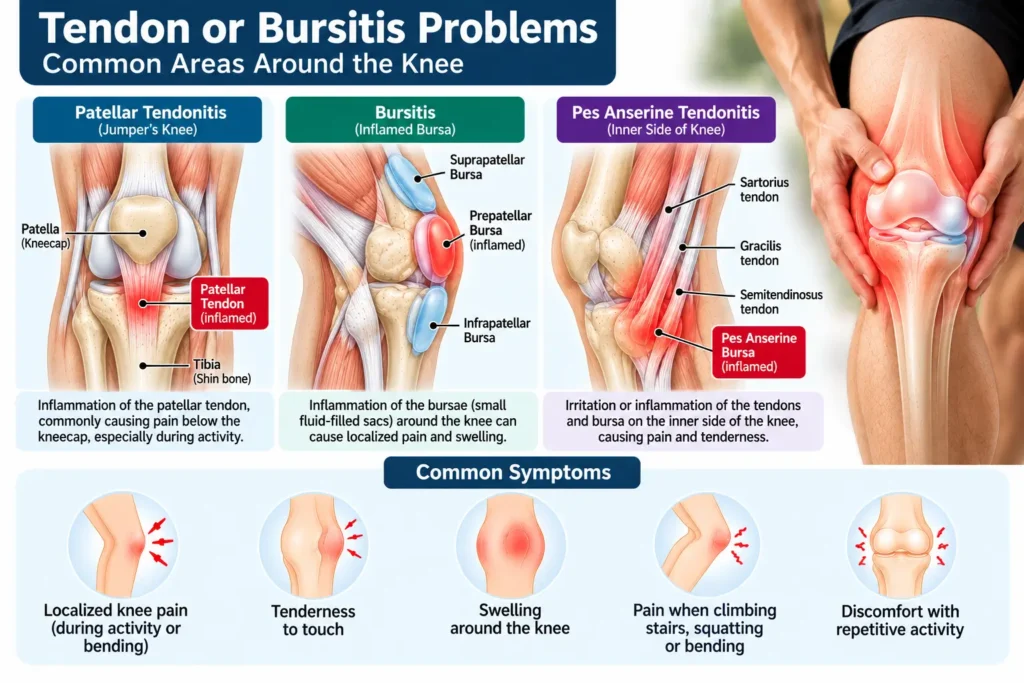
Irritation or inflammation involving these structures can cause localized knee pain and tenderness. The discomfort may become more noticeable during activities that repeatedly bend or place stress on the knee.
The exact location of the pain can help a healthcare professional determine which structure may be involved.
6. Overuse or Repetitive Stress
Sometimes pain on side of knee develops without one obvious injury.
A sudden increase in:
- Running
- Walking
- Cycling
- Squatting
- Exercise
- Sports activity
can place more stress on the muscles and tissues around the knee than they are used to handling.
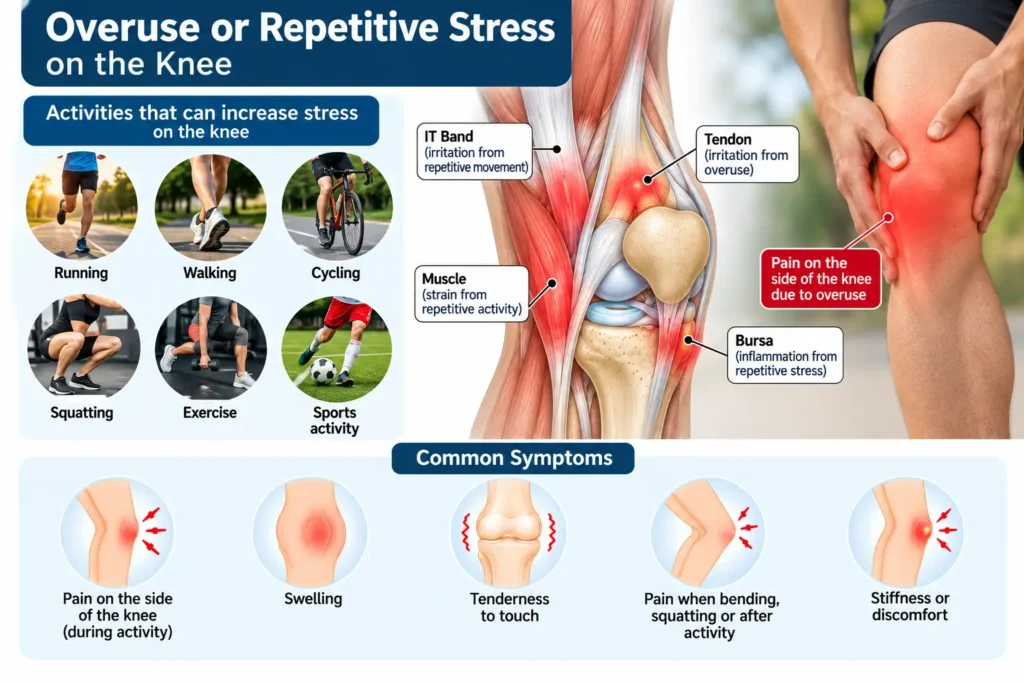
This type of pain may improve when the activity that aggravates it is reduced, but persistent or worsening pain should not simply be ignored.
7. A Previous Knee Injury or Surgery
A previous knee injury can sometimes continue to affect how the joint moves or bears weight. In some cases, people may also experience persistent knee pain after surgery.
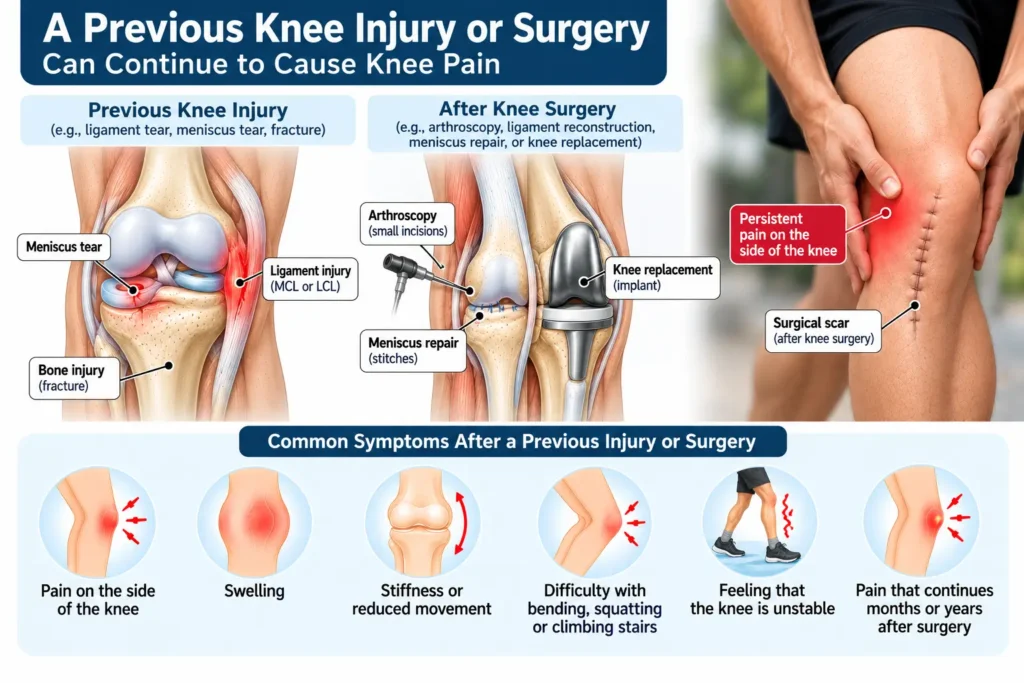
If the side of your knee hurts months or even years after an injury or procedure, it may be worth having the knee evaluated rather than assuming the pain is simply part of the old injury.
The cause may be related to the original condition, changes in the joint, surrounding tissues, or another source of pain.
What Other Symptoms Can Occur With Side Knee Pain?
The type of symptoms you experience along with knee pain can provide useful information when your doctor is evaluating the problem.
You may notice:
- Swelling around the knee
- Stiffness
- Tenderness
- Clicking or popping
- A catching or locking sensation
- Difficulty fully bending or straightening the knee
- Feeling that the knee may give way
- Pain when walking, climbing stairs, or squatting
For example, pain on the side of the knee accompanied by swelling and a catching or locking sensation may require a different evaluation than pain that develops gradually after increasing your exercise routine.
When Should You See a Doctor for Side Knee Pain?
Occasional knee discomfort may improve with appropriate activity modification, but persistent or worsening symptoms deserve attention.
Consider seeing a healthcare professional if you have:
- Knee pain that does not improve
- Pain that keeps coming back
- Significant swelling
- Difficulty walking or putting weight on the leg
- A knee that locks or catches
- A feeling that the knee is giving way
- Difficulty bending or straightening the knee
- Pain that started after an injury
- Pain that interferes with your normal activities
If you have severe pain after an injury, cannot put weight on the leg, or notice significant swelling or deformity, seek prompt medical evaluation.
Get Help for Persistent Knee Pain
Persistent knee pain can make walking, exercising, working, and everyday activities more difficult. Finding the cause of your pain is an important part of choosing the right treatment.
At Washington Pain and Spine Specialists, our pain management specialists evaluate patients with different types of chronic and persistent pain and develop treatment plans based on their individual condition and needs.
If side of knee pain is interfering with your daily life or has not improved with conservative care, schedule an appointment to discuss your symptoms and treatment options.