
Find the right neck pain specialist in Washington. We provide advanced, minimally invasive treatment for acute and chronic neck pain with precise diagnosis, targeted care, and same-week appointments from board-certified pain specialists.
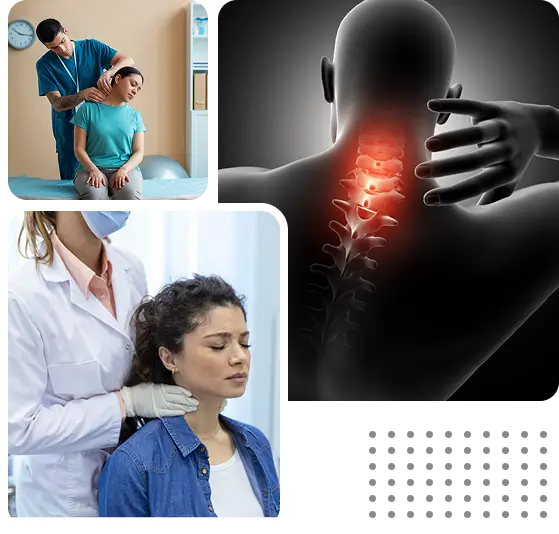
Neck pain is discomfort, stiffness, or restricted movement in the cervical spine — the seven vertebrae that support the head, house the spinal cord, and allow the neck’s full range of motion. Because the cervical spine connects the brain stem to the rest of the nervous system, neck pain that involves nerve compression produces symptoms far beyond the neck itself — radiating into the shoulder, arm, hand, or fingers, and sometimes causing headaches that persist even after the neck feels better.
Most acute neck pain resolves within 2 to 6 weeks with basic conservative care. When pain persists beyond 6 weeks, keeps recurring, or is accompanied by nerve symptoms, a neck pain treatment specialist can identify the structural source that is sustaining the problem — and treat it precisely rather than managing it indefinitely.
If your neck pain is accompanied by weakness or numbness in both arms or legs, difficulty walking, or loss of bladder or bowel control — seek emergency evaluation immediately. These can indicate spinal cord compression requiring urgent treatment.

Neck pain is not one condition — it is a symptom generated by several distinct structures in the cervical spine. A neck pain doctor with specialist training identifies which structure is responsible before recommending treatment. Here are the most common causes seen at WaPASS:
01.
The most common cause of neck pain that radiates into the arm. When a cervical disc herniates — the soft inner material pushing through a tear in the outer ring — it presses on the nerve roots that exit the cervical spine, producing arm pain, numbness, and weakness that can extend to the fingers. Cervical disc herniation most commonly occurs at the C5-C6 and C6-C7 levels.
02.
The most common cause of chronic neck pain in adults over 40. As the facet joints of the cervical spine degenerate with age — losing cartilage, developing bone spurs, and becoming inflamed — they produce a deep, aching neck pain that is typically worse in the morning and after prolonged sitting. Cervical spondylosis can also narrow the spinal canal (cervical stenosis), compressing the spinal cord and nerve roots.
03.
Cervical radiculopathy is the clinical term for a pinched or compressed nerve root in the cervical spine. It can be caused by disc herniation, bone spurs, or thickened ligaments narrowing the neural foramen. The hallmark is pain that follows a specific nerve pathway down the arm — distinguishing it from muscle pain, which tends to stay localised. Accurate diagnosis of which nerve root is affected is essential for targeting treatment correctly.
04.
Neck pain after a car accident is most commonly caused by whiplash — the rapid forward-and-backward motion of the neck during impact, which strains muscles and ligaments and can cause disc injury or facet joint damage. Whiplash symptoms sometimes appear 24 to 72 hours after the accident rather than immediately. Post-traumatic neck pain that does not resolve within 6 weeks requires specialist evaluation.
05.
The most common cause of acute, non-radiating neck pain. Prolonged forward head posture — typical of desk workers, phone users, and drivers — places sustained mechanical load on the cervical muscles and joints. While this type of neck pain often responds to posture correction and physiotherapy, when it becomes chronic or persistent it frequently indicates underlying structural changes that require specialist assessment.
06.
A narrowing of the spinal canal in the neck that compresses the spinal cord or nerve roots. Cervical stenosis can cause neck pain, arm pain, and — when the spinal cord is involved — symptoms in the legs as well, including difficulty walking or balance problems. This condition requires careful imaging and specialist evaluation before any treatment decision.
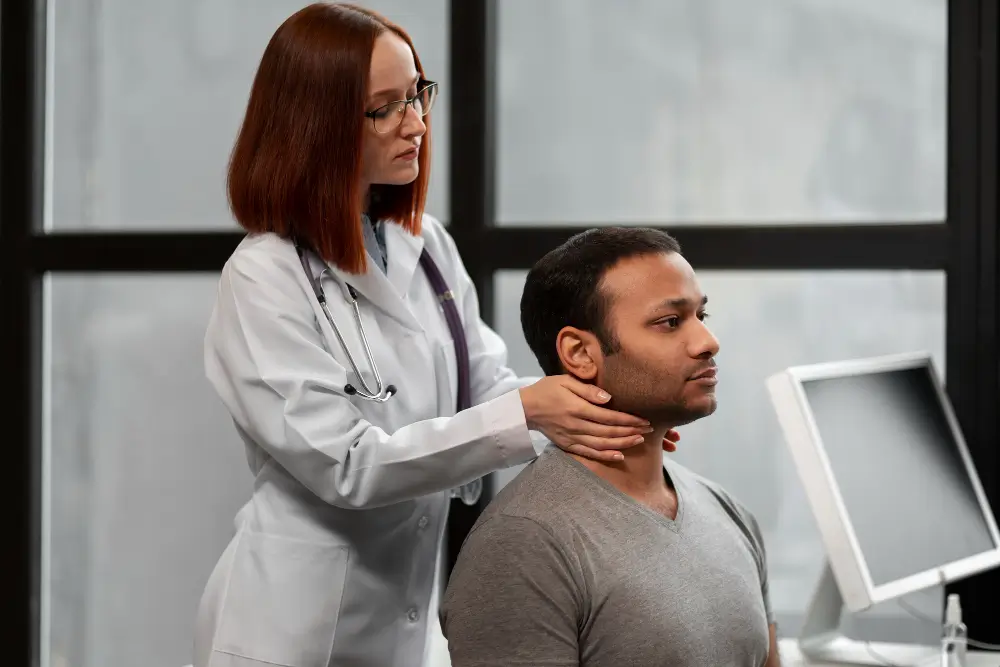
Neck pain treatment that actually resolves the problem starts with identifying which specific structure is responsible. At WaPASS, the diagnostic process is significantly more thorough than a standard GP or chiropractor assessment:
A normal MRI does not mean normal pain — and an abnormal MRI does not always identify your specific pain source. Specialist clinical evaluation maps the imaging finding to the clinical pattern. That is the difference between treatment that works and treatment that delays.
The right treatment for neck pain depends on the structural cause, the severity of nerve involvement, and how long symptoms have been present. At WaPASS we follow a structured escalation — starting with the least invasive effective approach and progressing only when needed. Surgery is the last resort, not the convenient answer.
When symptoms are recent and moderate, structured conservative management is the appropriate starting point:
Conservative care works well for early-stage neck pain. If symptoms have not improved meaningfully after 6 to 8 weeks — or are worsening — targeted interventional treatment is the next step.
Pain management for neck pain at the specialist level delivers targeted neck pain relief to the exact structure generating your symptoms:
The majority of neck pain patients at WaPASS achieve lasting neck pain relief through interventional pain management without surgery. Neck pain without surgery is not a compromise — it is the evidence-based standard for most cervical spine conditions.
A minority of patients — those with severe cervical cord compression, rapidly progressing neurological deficits, or structural problems that have genuinely failed all nonsurgical treatment — may be candidates for minimally invasive surgical intervention. At WaPASS, any surgical recommendation follows a thorough documented trial of interventional pain management, and minimally invasive techniques are always preferred over open procedures:

serving East King County, Kirkland, and Issaquah
serving Thurston County and South Puget Sound
serving Pierce County
serving Snohomish County and patients travelling from British Columbia
The best treatment for neck pain depends on the structural cause — cervical facet joint arthritis responds best to medial branch blocks and radiofrequency ablation, while disc-related arm pain responds best to cervical epidural steroid injections and nerve root blocks. For the majority of patients, targeted interventional pain management produces significantly better and more lasting outcomes than repeated courses of physiotherapy or long-term medication alone.
You should see a neck pain doctor if your neck pain has lasted more than 6 weeks without meaningful improvement, if you have pain radiating into your arm or hand, if you have numbness or weakness in the upper limb, or if your pain is affecting sleep, work, or daily activities. Pain that follows a car accident, fall, or trauma should be evaluated within 1 to 2 weeks regardless of severity.
Yes — the large majority of neck pain cases, including most cervical disc herniations and facet joint arthritis, are effectively treated with neck pain without surgery through targeted interventional procedures including epidural steroid injections, cervical medial branch blocks, and radiofrequency ablation. Surgery is appropriate for a minority of patients with severe structural compression or rapidly progressing neurological deficits — and at WaPASS it is always the last option, not the first recommendation.
For persistent or chronic neck pain, the right doctor is a board-certified neck pain specialist in interventional pain management — not a general practitioner or orthopaedic surgeon. A pain management specialist can identify the exact cervical structure causing your pain through diagnostic procedures and deliver targeted treatment without surgery in the majority of cases.
Acute neck pain from muscle strain or minor injury typically resolves within 2 to 6 weeks with appropriate conservative care. Neck pain caused by structural problems — disc herniation, cervical facet arthritis, or cervical stenosis — does not resolve on its own and becomes chronic (persisting beyond 12 weeks) without targeted treatment. Nerve-related neck pain that includes arm symptoms, numbness, or weakness requires specialist evaluation regardless of duration.
Cervical radiculopathy is nerve root compression in the cervical spine that causes pain, numbness, or weakness radiating from the neck into the arm. It is most commonly caused by a herniated cervical disc or bone spurs narrowing the opening through which nerve roots exit the spine. Cervical radiculopathy is treated with cervical epidural steroid injections and selective nerve root blocks — procedures that target the compressed nerve root directly and resolve arm symptoms in the majority of cases without surgery.
Morning neck pain that improves through the day is typically a sign of cervical facet joint inflammation or disc-related irritation that worsens with the sustained static position of sleep. Sleeping position, pillow height, and mattress support all contribute — but if morning neck stiffness is a regular pattern over weeks or months, it usually indicates an underlying structural issue rather than a sleeping habit that a pillow change will fix. A specialist evaluation is appropriate when morning neck pain is a consistent rather than occasional occurrence.
Most neck pain is not a sign of a serious underlying condition — it most commonly originates from muscle tension, disc degeneration, or facet joint inflammation, which are painful but not dangerous. However, neck pain that is accompanied by arm weakness, difficulty walking, loss of bladder or bowel control, fever, unexplained weight loss, or pain following trauma requires prompt medical evaluation to rule out more serious causes including spinal cord compression, infection, or fracture.
Get expert diagnosis and minimally invasive treatment designed to relieve your pain at the source — not just mask it.

Dr. Praveen Mambalam has been named a Seattle Magazine Top Doctor in Pain Medicine for five consecutive years — 2020, 2021, 2022, 2023, 2025 and 2026— and has been recognised by Castle Connolly as a Top Doctor for over five years. With more than 15 years of experience in interventional pain management, he leads a practice that has treated over 18,000 patients across Washington state.
Dr. Ho Dzung brings dual board certification in Anesthesiology and Pain Medicine, with 15+ years of expertise in interventional and minimally invasive pain care. A former Las Vegas specialist and consultant, he has been recognised by Desert Companion, Vegas Seven, Modern Luxury Vegas, and Castle Connolly over a 10-year period.
Dual board-certified in Anesthesiology and Pain Medicine, Dr. Ho Dzung brings over 15 years of experience in interventional and minimally invasive pain care. With a background as a specialist and consultant in Las Vegas, he now serves the Pacific Northwest, focusing on personalized, patient-centered treatment approaches.
He is an experienced interventional pain specialist with over 15 years of expertise. He is board-certified in Anesthesiology and Pain Medicine and specializes in neuromodulation and minimally invasive treatments for chronic pain.