Spinal stenosis affects millions of people, causing discomfort and limiting mobility. Understanding the 4 stages of spinal stenosis is crucial for recognizing symptoms early and exploring effective treatment options.This comprehensive guide breaks down each stage, from mild to severe, and explains the symptoms, treatment options, and spinal stenosis treatment approaches that may help improve your quality of life.
What is Spinal Stenosis?
Spinal stenosis is a progressive condition where the spinal canal (the space that houses the spinal cord and nerve roots) gradually narrows. This narrowing puts pressure on the nerves, causing discomfort, pain, numbness, and weakness. The condition typically develops in the lower back (lumbar stenosis) or neck (cervical stenosis) due to age-related changes, arthritis, bone spurs, or disc herniation.
Early detection and intervention can slow progression and improve outcomes. Let’s explore the four distinct stages of spinal stenosis and what each means for your health.
What Are The 4 Stages of Spinal Stenosis
Spinal stenosis typically progresses gradually over time, with symptoms becoming more severe as nerve compression increases. The condition is commonly divided into four stages of spinal stenosis based on symptom severity, mobility limitations, and the impact on daily activities. Understanding these stages can help patients recognize early warning signs, seek timely treatment, and prevent long-term complications.
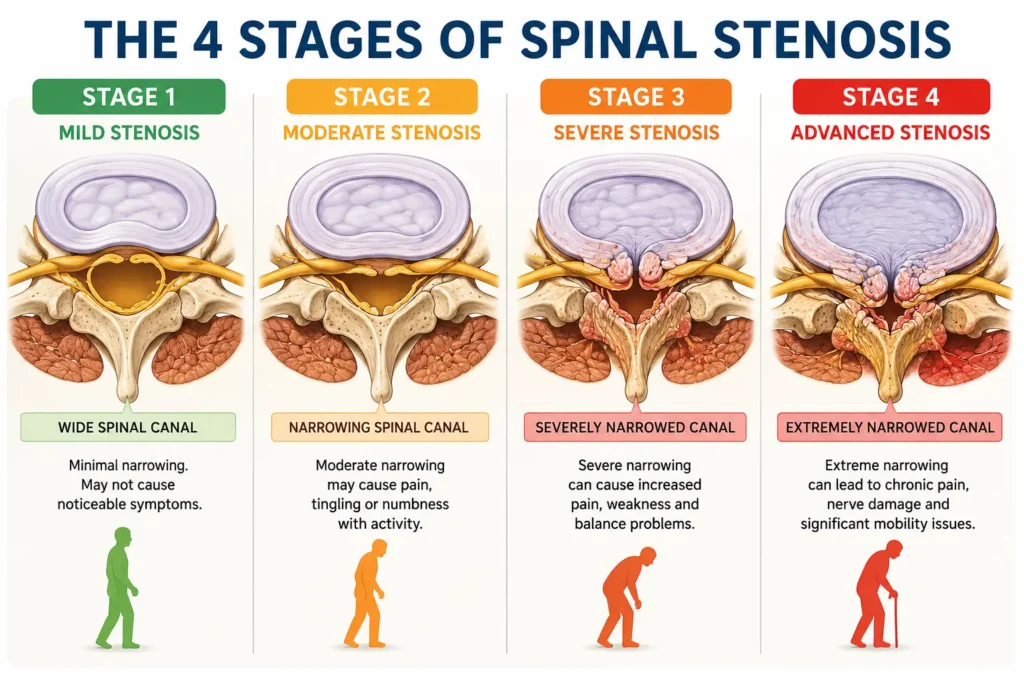
Stage 1: Mild Spinal Stenosis (Early Narrowing)
At Stage 1, the spinal canal begins to narrow slightly, often causing mild or occasional symptoms. Many people at this stage don’t even realize they have the condition.
Common Symptoms
- Occasional mild back pain
- Mild tingling or numbness during prolonged standing or walking
- General stiffness, especially after activity
- Fatigue that improves with rest or leaning forward
Treatment Approach
At this early stage, conservative treatments are highly effective. These include physical therapy, posture correction, activity modification, and over-the-counter pain relief. Many patients find significant relief through lifestyle changes and preventive care.
Stage 2: Moderate Spinal Stenosis (Progressive Narrowing)
In Stage 2, the narrowing of the spinal canal becomes more noticeable, and symptoms may begin to interfere with daily activities. Increased pressure on the nerves can lead to more frequent pain, numbness, and mobility discomfort.
Common Symptoms
- Intermittent pain in the back, buttocks, or legs
- Numbness or tingling that radiates to the legs
- Difficulty walking longer distances
- Pain that worsens with standing and improves with sitting or bending forward
- Muscle weakness in the legs
Treatment Approach
Treatment at this stage typically includes physical therapy, targeted pain management, anti-inflammatory medications, and specialized procedures like epidural steroid injections. Many patients benefit from multimodal pain management strategies tailored to their specific needs.
Stage 3: Severe Spinal Stenosis (Significant Narrowing)
Stage 3 represents advanced progression of spinal stenosis, where nerve compression becomes severe enough to significantly affect daily functioning, mobility, and overall quality of life.
Common Symptoms
- Persistent, chronic pain in the lower back, buttocks, and legs
- Significant weakness and numbness in the legs
- Severe limitations in walking distances (neurogenic claudication)
- Difficulty with balance and coordination
- Pain that significantly interferes with sleep and daily activities
Treatment Approach
Stage 3 stenosis often requires aggressive pain management and specialized interventions. Treatment may include stronger medications, advanced pain management techniques (such as spinal cord stimulation or medial branch blocks), and careful consideration of surgical options. Many patients at this stage benefit from comprehensive pain management programs that address both physical and psychological aspects of chronic pain.
Stage 4: End-Stage Spinal Stenosis (Severe Compression)
Stage 4 is the most advanced stage of spinal stenosis, where severe spinal canal narrowing causes major nerve compression and significant neurological symptoms that can greatly impact independence and mobility.
Common Symptoms
- Severe, constant pain that significantly impacts quality of life
- Severe weakness and numbness in the legs and feet
- Significant mobility limitations and potential paralysis
- Loss of bladder or bowel control (cauda equina syndrome)
- Severely compromised independence
- Potential permanent neurological damage if left untreated
Treatment Approach
At Stage 4, surgical intervention is often necessary to prevent permanent neurological damage. Decompression surgery, laminectomy, or fusion procedures may be recommended. Even with surgery, comprehensive pain management and rehabilitation are essential for optimal outcomes.
Quick Comparison: Stages of Spinal Stenosis
| Stage | Canal Narrowing | Key Symptoms | Treatment |
| Mild | < 25% | Minimal or occasional pain | Conservative care |
| Moderate | 25-50% | Intermittent pain, numbness | PT, medications, injections |
| Severe | 50-75% | Persistent pain, weakness | Advanced pain mgmt |
| End-Stage | > 75% | Severe deficits, possible paralysis | Often requires surgery |
Note: The progression of spinal stenosis can vary from person to person. These stages are based on symptom severity and nerve compression rather than an official universal grading system.
Treatment Options for Each Stage
Conservative Treatments (Stages 1-2)
- Physical therapy and targeted exercises
- Nonsteroidal anti-inflammatory drugs (NSAIDs)
- Posture correction and ergonomic adjustments
- Activity modification and lifestyle changes
Advanced Pain Management (Stages 2-3)
- Epidural steroid injections
- Facet joint injections
- Selective nerve root blocks
- Prescription pain medications
- Spinal cord stimulation therapy
Surgical Interventions (Stages 3-4)
- Decompression surgery (laminectomy)
- Spinal fusion
- Minimally invasive spinal procedures
Final Thought
Understanding the stages of spinal stenosis empowers you to take action early. Whether you’re experiencing mild back pain or severe limitations, the specialists at Washington Pain & Spine are here to help.
Our comprehensive pain management approach combines cutting-edge treatments, personalized care plans, and evidence-based strategies to help you reclaim your mobility and quality of life.
Schedule a consultation with our experienced pain management specialists today. We’ll evaluate your condition, explain your treatment options, and create a personalized plan to address your pain and improve function.