Find relief from back, leg, neck, and nerve pain caused by spinal stenosis with minimally invasive treatments designed to restore mobility and improve quality of life.
Spinal stenosis is a narrowing of the spaces within your spine that can put pressure on the nerves and spinal cord. It most commonly affects the lumbar (lower back) and cervical (neck) regions.
Narrowing in the lower spine — the most common form. Causes leg pain, cramping, and difficulty walking long distances.
Narrowing in the neck region. Can cause arm pain, hand weakness, and in severe cases, problems with balance and coordination.
The main spinal canal narrows, compressing the spinal cord itself — often causing the most widespread symptoms.
The openings where nerve roots exit the spine narrow, compressing individual nerve roots and causing radiating pain.
Natural wear and tear causes bone spurs and thickened ligaments that narrow the canal
Disc material bulging into the spinal canal compresses nearby nerve roots
The ligament lining the canal thickens over time, intruding into the spinal space
Disc height loss causes vertebrae to compress closer together, narrowing exit openings
One vertebra slips forward over another, directly reducing spinal canal space
We prioritize minimally invasive, evidence-based solutions. Our treatment ladder moves from conservative options toward surgical interventions only when necessary — with each step personalized to your condition.
Anti-inflammatory steroids are delivered directly into the epidural space around compressed nerves, providing targeted relief from inflammation and nerve irritation.
Radio waves generate heat that disrupts pain signals from specific nerves — providing months to years of relief from facet-joint-related stenosis pain.
Electrical impulses from a small implanted device block pain signals before they reach the brain — ideal for patients with chronic stenosis pain who haven’t responded to other treatments.
Mild electrical impulses block localized pain signals from peripheral nerves. A trial phase allows you to evaluate the results before permanent implantation.
Minimally Invasive Lumbar Decompression removes thickened ligament tissue to restore space in the spinal canal — directly addressing a root cause of lumbar stenosis.
A small implant placed between vertebrae expands and holds them apart, relieving pressure on spinal nerves. FDA-cleared for lumbar spinal stenosis with durable long-term results.
For severe, refractory pain, a programmable pump delivers small doses of medication directly to the intrathecal space — far more effective than oral dosing with fewer side effects.
Local anesthetic injected near the medial branch nerves serves both a diagnostic purpose — confirming the pain source — and immediate therapeutic relief.
When appropriate, carefully monitored medication regimens complement interventional care — with regular evaluations to maximize effectiveness and minimize side effects.
MILD directly treats a primary structural cause of lumbar spinal stenosis: hypertrophic (thickened) ligamentum flavum. By removing excess ligament material through a tiny incision, MILD restores room in the spinal canal and relieves nerve pressure.
Most patients experience significant improvement in standing and walking tolerance, and can return home the same day.
Pain after a car accident doesn’t follow one pattern. Some injuries show symptoms right away, while others take days or even weeks to appear. It’s also common for patients to get emergency treatment, feel stable again, and later develop pain that didn’t exist before.
1
MRI imaging confirms ligamentum flavum hypertrophy as a contributing factor
2
A single small incision gives access — no general anesthesia or hospital stay required
3
Specialized instruments precisely remove the excess thickened ligament tissue
4
Spinal canal volume increases, relieving pressure on the cauda equina nerve bundle
5
Patients go home within hours and begin noticing improved walking tolerance
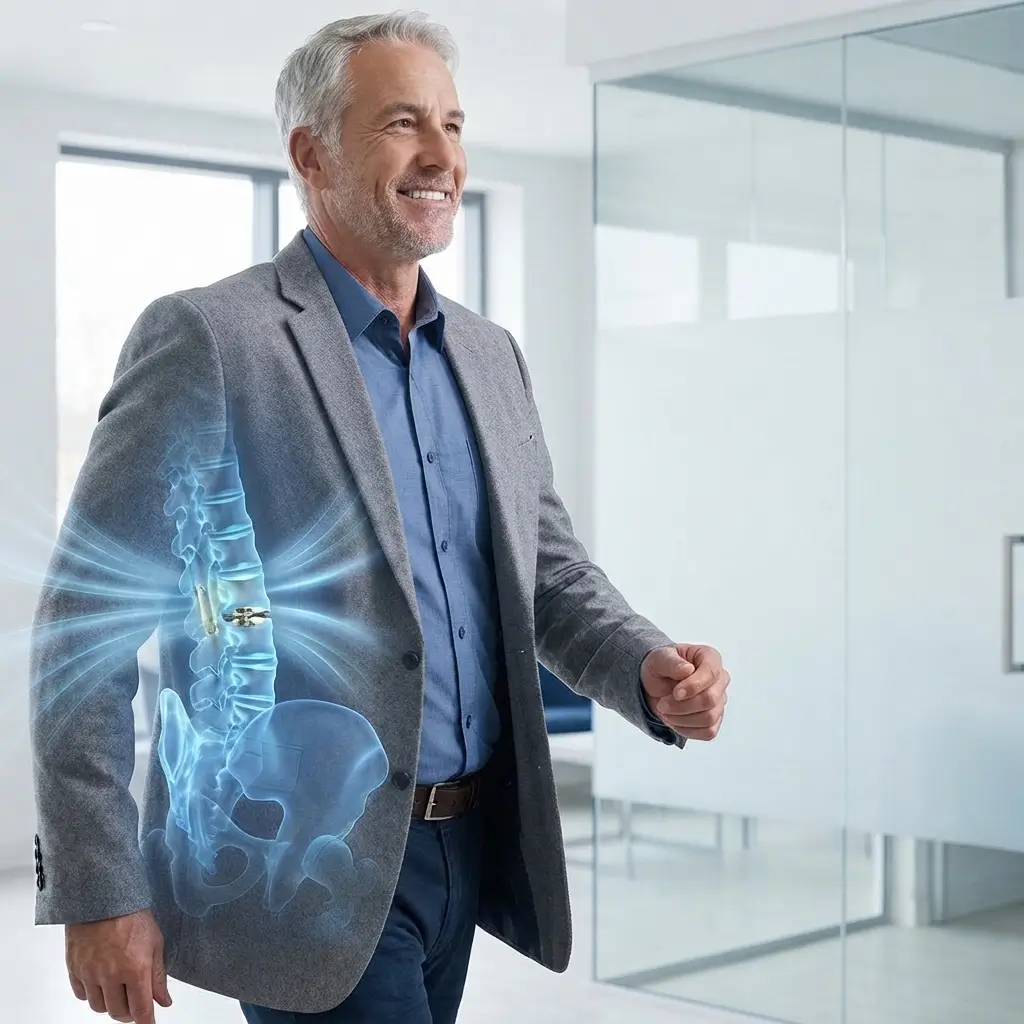
The Vertiflex implant is placed between the spinous processes, gently holding the vertebrae apart and creating more room for compressed nerves, without removing bone or disc material.
Yes, the majority of spinal stenosis patients can find meaningful relief through non-surgical interventions. WaPASS offers a full range of options from injections and nerve procedures to the MILD and Vertiflex procedures, all of which address stenosis without traditional open surgery.
Your specialist will conduct a comprehensive evaluation including imaging, clinical assessment, and medical history review. The right treatment depends on the location and severity of stenosis, prior treatments tried, and your overall health and lifestyle goals.
MILD is an outpatient procedure performed through a tiny incision. Most patients are discharged within hours and can return to light activity quickly. Significant improvements in walking and standing tolerance are often noticed within weeks.
Yes, the Vertiflex Superion Spacer is covered by Medicare and most major insurance plans for appropriate candidates. Our team works with insurers to assist with prior authorizations and any required appeals.
Relief from ESI varies by patient — many experience significant improvement lasting several weeks to months. Injections can be repeated as part of an ongoing management plan and are often combined with other therapies for better long-term outcomes.
Absolutely. We regularly treat older adults — the demographic most affected by spinal stenosis. All procedures are selected with your safety, comfort, and ability to return to normal activities in mind.
Dr. Praveen Mambalam has been named a Seattle Magazine Top Doctor in Pain Medicine for five consecutive years — 2020, 2021, 2022, 2023, 2025 and 2026— and has been recognised by Castle Connolly as a Top Doctor for over five years. With more than 15 years of experience in interventional pain management, he leads a practice that has treated over 18,000 patients across Washington state.
Dr. Ho Dzung brings dual board certification in Anesthesiology and Pain Medicine, with 15+ years of expertise in interventional and minimally invasive pain care. A former Las Vegas specialist and consultant, he has been recognised by Desert Companion, Vegas Seven, Modern Luxury Vegas, and Castle Connolly over a 10-year period.
Dual board-certified in Anesthesiology and Pain Medicine, Dr. Ho Dzung brings over 15 years of experience in interventional and minimally invasive pain care. With a background as a specialist and consultant in Las Vegas, he now serves the Pacific Northwest, focusing on personalized, patient-centered treatment approaches.
He is an experienced interventional pain specialist with over 15 years of expertise. He is board-certified in Anesthesiology and Pain Medicine and specializes in neuromodulation and minimally invasive treatments for chronic pain.