Neck pain when turning your head left or right can make even simple daily activities uncomfortable. Some people experience mild stiffness, while others feel a sharp pain in the neck when turning the head suddenly. In many cases, the discomfort may start after sleeping in the wrong position, long hours at a desk, poor posture, or sudden movements. However, persistent neck pain can also be linked to underlying spine conditions, nerve compression, or age-related wear and tear.
If your symptoms continue or interfere with daily activities, consulting a neck pain management specialist can help identify the root cause and determine the most effective treatment plan for lasting relief.
Understanding the possible causes of neck pain when turning your head is important for finding the right treatment and preventing the condition from becoming more serious. In this article, we’ll explore common causes, symptoms, treatment options, and when it may be time to seek professional care from a neck pain specialist.
What Causes Neck Pain When Turning Your Head?
Neck pain when turning your head can develop due to several conditions, ranging from simple muscle strain to more complex spine-related problems. Understanding the possible causes can help you identify when it may be time to seek medical attention.
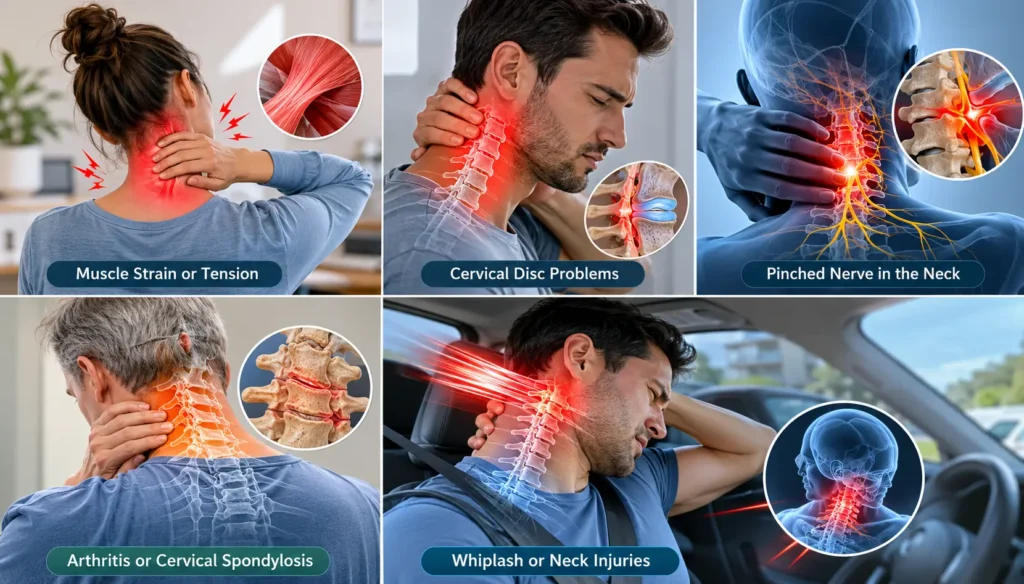
Muscle Strain or Tension
This is one of the most common causes of neck pain when turning the head. Muscle strain can develop from everyday habits and repetitive movements that place stress on the neck muscles and ligaments.
- Prolonged poor posture (especially from desk work or phone use)
- Sudden, awkward movements
- Stress and muscle tension accumulation
- Sleeping in an unusual position
- Overuse during sports or physical activities
This often leads to:
- Neck stiffness
- Soreness
- Tight muscles
- Pain while turning the head
Cervical Disc Problems
The cervical discs act as cushions between the bones in the neck. When a disc becomes damaged or begins to wear down, it may irritate nearby nerves and cause pain during movement.
Cervical disc problems may occur due to:
- Herniated or bulging discs
- Age-related disc degeneration
- Repetitive strain on the neck
- Previous neck injuries
Common symptoms include:
- Pain spreading to the shoulders or arms
- Tingling or numbness
- Weakness in the arms or hands
- Difficulty moving the neck left or right comfortably
Pinched Nerve in the Neck
A pinched nerve occurs when surrounding tissues place pressure on a nerve in the cervical spine. This can cause sharp pain and neurological symptoms that worsen with certain neck movements.
A pinched nerve may develop due to:
- Herniated cervical discs
- Bone spurs from arthritis
- Spinal narrowing (stenosis)
- Repetitive neck strain
- Neck injuries or inflammation
This condition may cause:
- Sharp neck pain when turning the head
- Burning or shooting pain
- Tingling sensations in the arms or hands
- Numbness
- Muscle weakness
- Pain radiating to the shoulders
Arthritis or Cervical Spondylosis
Cervical spondylosis is an age-related condition that affects the joints, discs, and bones in the neck. Over time, wear and tear can reduce flexibility and cause chronic discomfort.
This condition commonly develops due to:
- Natural aging
- Degeneration of spinal discs
- Joint wear and tear
- Long-term poor posture
- Repetitive neck stress
Symptoms may include:
- Chronic neck stiffness
- Grinding or clicking sensations
- Reduced neck mobility
- Headaches originating from the neck
- Ongoing discomfort during daily activities
Whiplash or Neck Injuries
Sudden trauma can strain or damage the muscles, ligaments, and joints in the neck. Whiplash injuries are especially common after car accidents or sports-related impacts.
Neck injuries may occur due to:
- Car accidents
- Sports injuries
- Falls or sudden impacts
- Sudden jerking movements
- Physical trauma to the neck
These injuries often lead to:
- Severe neck stiffness
- Pain when moving the neck
- Muscle spasms
- Headaches
- Shoulder pain
- Reduced range of motion
- Persistent soreness after injury
How Neck Rotation Actually Works
To understand neck pain during rotation, it helps to know the anatomy involved.
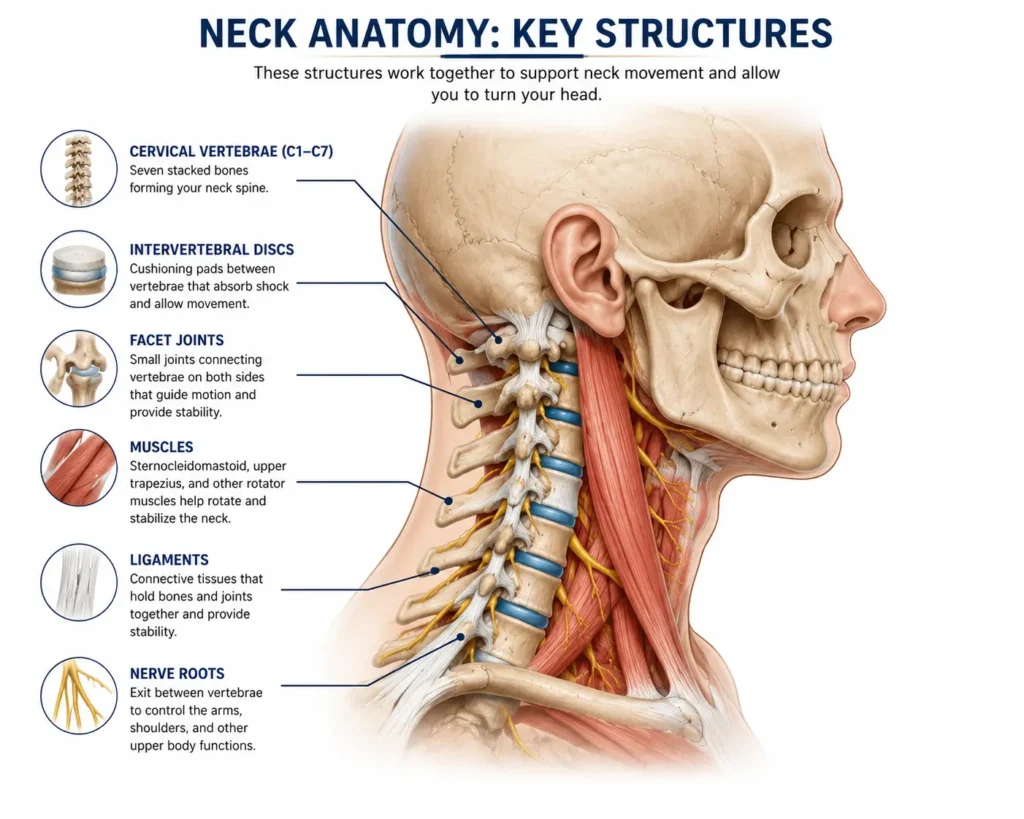
Key Structures Involved in Neck Rotation
Cervical Vertebrae (C1-C7): Seven stacked bones forming your neck spine
Intervertebral Discs: Cushioning pads between vertebrae
Facet Joints: Small joints connecting vertebrae on both sides
Muscles: Sternocleidomastoid, upper trapezius, and other rotator muscles
Ligaments: Connective tissues holding structures together
Nerve Roots: Exit between vertebrae to control arms and shoulders
Most neck rotation occurs at the upper cervical spine, particularly at C1 and C2 vertebrae. The middle and lower cervical spine contribute to combined movements like rotation plus flexion.
When any of these structures become irritated, inflamed, or damaged, turning your head triggers pain signals.
Interventional Treatments (When Conservative Fails)
Cervical Epidural Steroid Injection
Delivers anti-inflammatory medication directly around the nerve roots. Provides 6-12 weeks of relief in 70-80% of patients with nerve-related pain.
Facet Joint Injection
Targets arthritic small joints causing localized pain. Helps patients with pain on one side of the neck.
Trigger Point Injection
Addresses muscle knots and spasms. Works well for muscle-strain related pain.
Radiofrequency Ablation
Uses heat to disable nerves causing chronic pain. Provides relief lasting 6-12 months.
When Should You See a Pain Management Specialist?
Neck pain that continues to return or becomes more intense over time may require professional evaluation. While mild discomfort can sometimes improve with rest, certain symptoms may indicate an underlying condition that needs medical attention.
It may be time to consult a pain specialist if you notice:
- Difficulty turning your head comfortably
- Sharp or sudden pain with movement
- Stiffness that limits daily activities
- Pain spreading into the shoulders or arms
- Tingling or numbness in the hands
- Frequent headaches associated with neck tension
- Symptoms that continue despite home care
- Neck pain following an accident or injury
A pain management specialist can help determine the source of the pain and create a personalized treatment plan focused on improving movement, reducing discomfort, and helping you return to normal activities more comfortably.
Final Thought
Neck pain when turning your head can make everyday activities uncomfortable and difficult. While some cases improve with rest and simple care, ongoing or severe pain may need professional attention.
Identifying the cause early and getting the right treatment can help reduce pain, improve movement, and prevent future problems. If your symptoms continue or interfere with daily life, consulting a pain management specialist may help you find lasting relief.