
Get expert back pain treatment from board-certified pain specialists at WaPASS. Serving patients across Everett, Bellevue, Tukwila, Tacoma and Olympia.
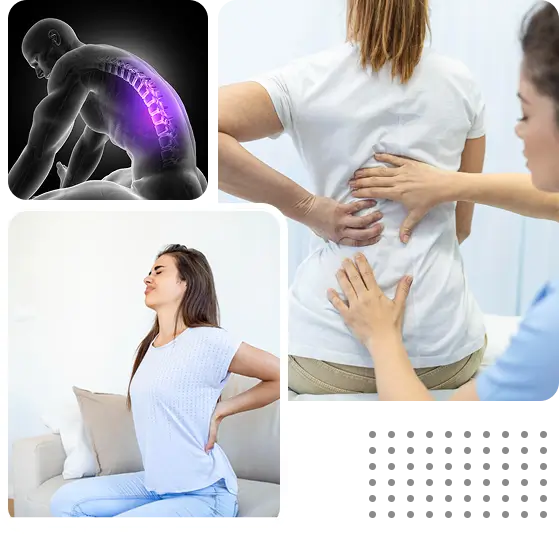
Back pain affects nearly 8 out of 10 adults at some point in their lives, making it one of the leading causes of disability worldwide. Yet despite how common it is, many people continue to rely on temporary fixes that do not address the real problem. If your pain keeps returning, is not improving with medication or physical therapy, or has become a daily limitation, it is often a sign that the underlying cause has not been properly identified.
Back pain can originate from multiple structures in the spine, including discs, nerves, joints, and muscles. Without a precise diagnosis, treatment often becomes trial-and-error, leading to ongoing discomfort and frustration. The key to lasting relief is identifying the exact source of pain and treating it with a targeted, evidence-based approach.
At Washington Pain and Spine Specialists (WaPASS), our board-certified pain specialists provide diagnosis and treatment for acute and chronic back pain. We serve patients across Washington from our locations in Everett, Bellevue, Tukwila, Tacoma, and Olympia, using personalized, minimally invasive treatment options based on the underlying cause of pain.
Back pain is not a single condition, it is a symptom that can originate from dozens of different structures in and around the spine: discs, nerves, joints, muscles, ligaments, and bones. This is why generic treatment often fails. The approach that relieves muscle strain does not address a herniated disc. The therapy that helps early-stage arthritis does not resolve nerve compression. Effective back pain care starts with identifying which structure is responsible.
Most acute back pain, pain that develops suddenly after an injury or overexertion, resolves within 6 to 12 weeks with basic conservative care. But when back pain persists beyond 12 weeks, keeps returning, or is accompanied by nerve symptoms like leg pain or numbness, a back pain treatment specialist is no longer optional, it is the only pathway to a diagnosis precise enough to guide effective treatment.
Understanding the type of back pain you have is critical to choosing the right treatment approach:

If your back pain is accompanied by loss of bladder or bowel control, seek emergency care immediately. This can indicate cauda equina syndrome, a condition requiring urgent intervention.

Back pain that has lasted more than 6 to 12 weeks without meaningful improvement
Pain that radiates from the back into the leg, hip, or foot, especially shooting or electric pain
Numbness, tingling, or weakness in the lower body
Pain that worsens despite rest, medication, or physical therapy
Back pain that consistently disrupts sleep
Pain following an injury, fall, or car accident
Back pain that has been ‘managed’ for months or years without ever fully resolving
Understanding the cause of your back pain is the difference between treatment that works and treatment that merely delays the next flare-up. A skilled back pain doctor does not simply treat the symptom, they identify the structure responsible and target it precisely. Here are the most common causes seen at WaPASS:
01.
The most common cause of lower back pain that radiates into the leg. When the soft inner material of a spinal disc pushes through its outer casing, it presses on nearby nerve roots, causing the sharp, shooting pain that defines disc-related sciatica. Disc herniation most commonly occurs at the L4-L5 or L5-S1 levels in the lumbar spine.
02.
As spinal discs wear down over time they lose height and their ability to absorb shock, reducing the space available for nerve roots and creating the conditions for chronic pain. Degenerative disc disease is extremely common over 40 and does not automatically mean surgery. Most cases are effectively managed with targeted interventional treatment.
03.
A narrowing of the spinal canal that compresses the spinal cord and nerve roots. More common in adults over 50, stenosis typically causes symptoms that worsen with walking and extended standing, and improve temporarily when sitting or bending forward. Leg heaviness and cramping alongside back pain are characteristic signs.
04.
The facet joints connect vertebrae and allow the spine to flex and rotate. When these joints become arthritic, they produce a deep, aching lower back pain that is typically worse in the morning, after prolonged sitting, or with extension movements like standing up straight. Facet joint pain is one of the most common, and most commonly missed, causes of chronic lower back pain.
05.
The sacroiliac (SI) joint connects the base of the spine to the pelvis. When this joint becomes inflamed or moves abnormally, it produces lower back and buttock pain that is frequently mistaken for sciatica or hip pain. SI joint dysfunction is an underdiagnosed cause of persistent lower back pain, particularly in women after pregnancy and in patients following lumbar fusion surgery.
06.
The most common cause of acute back pain. Overstretching or micro-tearing of the muscles, tendons, and ligaments of the back produces immediate pain and spasm. While most strains resolve with conservative care, recurring muscle strain often indicates an underlying structural problem — such as disc degeneration or joint instability, that has never been properly addressed.
07.
This occurs when one vertebra slips forward over the vertebra below it, creating instability and nerve compression. Even minor slippage can produce significant lower back and leg pain, and it is frequently identified for the first time after a patient has been experiencing unexplained back pain for months or years.

You’re not alone, and you have options. We focus on advanced, minimally invasive treatments designed to relieve back pain without going through surgery.
Accurate diagnosis is the foundation of every effective back pain treatment plan. At WaPASS, a specialist evaluation goes significantly deeper than a standard GP appointment or a review of imaging alone:
A normal MRI does not mean normal pain and an abnormal MRI does not always explain the specific pain pattern a patient is experiencing. Specialist clinical evaluation is what maps anatomy to symptoms and enables treatment that actually works.

WaPASS provides specialist back pain treatment in Washington at five locations, making board-certified back pain treatment specialist care accessible across the state:
serving Snohomish County and patients travelling from British Columbia
The best back pain doctor in Washington is a board-certified pain management specialist with fellowship training in interventional procedures and the diagnostic tools to identify the exact source of your pain. Dr. Praveen Mambalam at WaPASS is independently recognised by Seattle Magazine and Castle Connolly as a top pain medicine physician in Washington state, with over 15 years of experience and 18,000+ patients treated. WaPASS serves patients across Washington with locations in Everett, Tukwila, Bellevue, Olympia, and Tacoma.
The most effective chronic back pain treatment depends on the cause. For disc-related pain, epidural steroid injections combined with targeted physical therapy produce strong outcomes. For facet joint arthritis, medial branch blocks followed by radiofrequency ablation provide 12 to 24 months of relief. For complex or refractory cases, spinal cord stimulation has a strong evidence base. The key is identifying which structure is responsible, treatment for back pain that is not matched to the correct cause rarely provides lasting results.
For persistent or chronic back pain, a board-certified pain management doctor for back pain is the most appropriate specialist. Unlike a GP who manages the early stages of back pain, or a surgeon who evaluates structural problems for operative intervention, a pain management specialist has the full range of diagnostic and interventional tools to treat back pain at its source without surgery. If your back pain has lasted more than 6 to 8 weeks or previous treatments have not worked, a back pain treatment doctor with interventional training is the right next step.
Yes, the majority of back pain cases, including many that have been told surgery is the next option, can be effectively managed with interventional pain management back pain techniques. Epidural steroid injections, nerve blocks, radiofrequency ablation, and spinal cord stimulation collectively provide lasting relief for most patients without an operation. At WaPASS, surgery is genuinely the last option — not a convenience or a default, and the large majority of our back pain patients never reach that stage.
Interventional pain management for back pain refers to minimally invasive, image-guided procedures that target the specific source of pain rather than managing it systemically with medication. These include epidural steroid injections, facet joint injections, medial branch blocks, radiofrequency ablation, and spinal cord stimulation. Unlike surgery, interventional procedures do not require general anaesthesia, involve minimal recovery time, and can often be performed in an outpatient setting with same-day discharge.
The timeline varies by treatment. Epidural steroid injections typically provide noticeable improvement within 1 to 2 weeks. Radiofrequency ablation provides more gradual relief peaking at 4 to 6 weeks and lasting 12 to 24 months. Physical therapy shows progressive improvement over 4 to 12 weeks when combined with interventional care. Your specialist will give you a specific timeline based on your diagnosis and treatment plan.
Persistent back pain that does not respond to rest, medication, or basic physical therapy usually indicates an underlying structural cause, disc herniation, spinal stenosis, facet joint arthritis, sacroiliac joint dysfunction, or spondylolisthesis — that has not been precisely diagnosed and targeted. Generic treatment cannot address a specific structural problem. A specialist evaluation with imaging review and, where needed, diagnostic injections is what identifies the correct cause and enables effective treatment.

Dr. Praveen Mambalam has been named a Seattle Magazine Top Doctor in Pain Medicine for five consecutive years — 2020, 2021, 2022, 2023, 2025 and 2026— and has been recognised by Castle Connolly as a Top Doctor for over five years. With more than 15 years of experience in interventional pain management, he leads a practice that has treated over 18,000 patients across Washington state.
Dr. Ho Dzung brings dual board certification in Anesthesiology and Pain Medicine, with 15+ years of expertise in interventional and minimally invasive pain care. A former Las Vegas specialist and consultant, he has been recognised by Desert Companion, Vegas Seven, Modern Luxury Vegas, and Castle Connolly over a 10-year period.
Dual board-certified in Anesthesiology and Pain Medicine, Dr. Ho Dzung brings over 15 years of experience in interventional and minimally invasive pain care. With a background as a specialist and consultant in Las Vegas, he now serves the Pacific Northwest, focusing on personalized, patient-centered treatment approaches.
He is an experienced interventional pain specialist with over 15 years of expertise. He is board-certified in Anesthesiology and Pain Medicine and specializes in neuromodulation and minimally invasive treatments for chronic pain.