
Find lasting relief from herniated disc pain with expert care at Washington Pain and Spine Specialists. Our board-certified doctors use advanced, minimally invasive treatments to target the exact source of nerve compression — helping you recover without unnecessary surgery. Same-week appointments available across Washington.
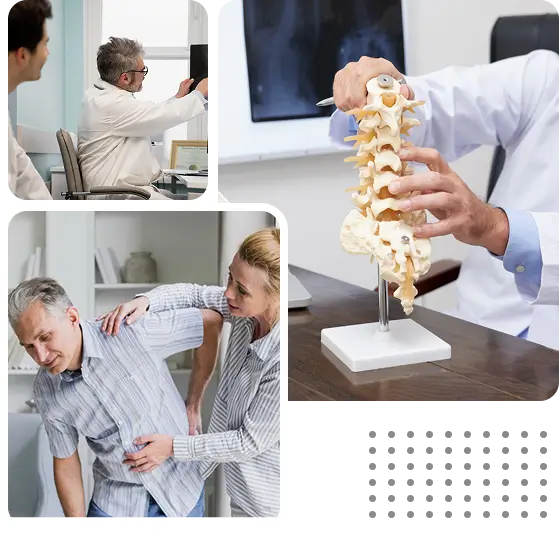
A herniated disc is one of the most common and most commonly mismanaged causes of back and leg pain. If you have been told your only options are rest, pain medication, and eventually surgery, you are not getting the full picture. Most herniated discs respond very well to targeted interventional herniated disc treatment without surgery, when the right herniated disc doctor identifies the exact disc level involved and the precise nerve being compressed.
At Washington Pain and Spine Specialists (WaPASS), our board-certified pain management physicians provide advanced, image-guided herniated disc treatment in Washington across five locations Everett, Tukwila, Bellevue, Olympia, and Tacoma. Same-week appointments available. Most major insurance accepted.
in its tough outer casing. The spinal discs sit between each vertebra and act as shock absorbers, allowing the spine to flex and bear load. When a disc herniates, the displaced material presses on the nearby nerve roots, producing pain, numbness, tingling, or weakness that can radiate far from the site of the disc itself.
A herniated disc is also referred to as a slipped disc, ruptured disc, or prolapsed disc, all describing the same underlying condition. Most herniated discs occur in the lower back (lumbar spine) or the neck (cervical spine). The pain pattern depends entirely on which disc is affected and which nerve root is being compressed.
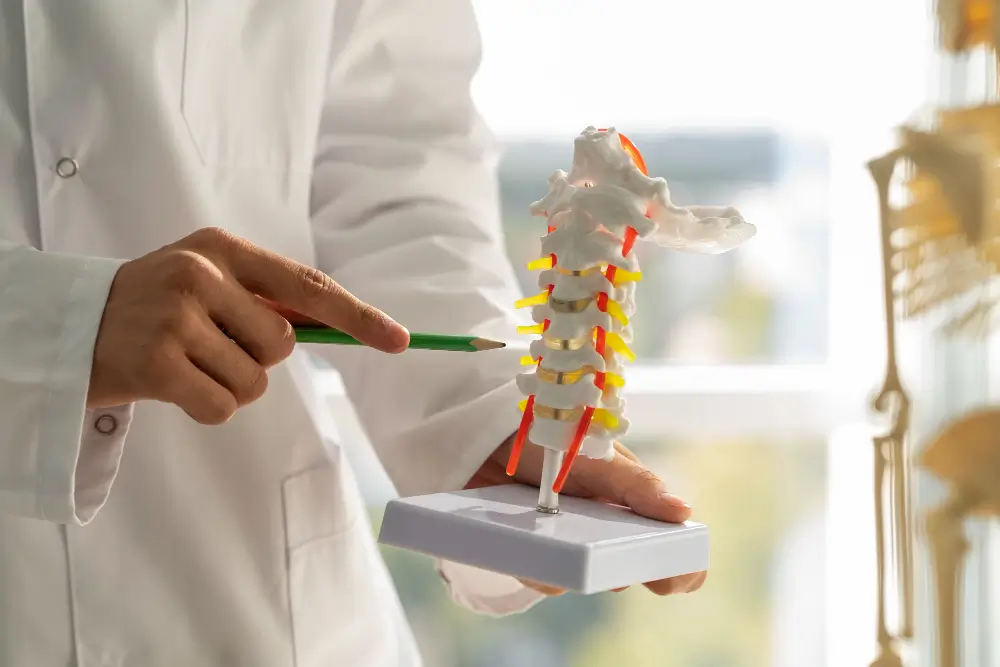
Disc herniation is rarely caused by a single dramatic event, most herniated discs develop through a combination of age-related disc deterioration and a triggering mechanical stress. Understanding the cause helps a specialist select the most effective treatment approach.
01.
As we age, spinal discs progressively lose water content becoming flatter, stiffer, and less resilient. The outer fibrous ring develops small cracks and weak spots over time. This process, known as disc degeneration, is the primary underlying reason why herniated discs most commonly occur between the ages of 30 and 55. The disc does not suddenly herniate without cause it has been weakening for years before the final breach.
02.
Lifting a heavy object with the back rather than the legs, twisting while lifting, or any sudden awkward movement that places high compressive and rotational force on the lumbar spine can trigger the final herniation in a disc that has already been degenerating. This is why patients often report that their disc herniated while doing something apparently minor, the disc was already vulnerable.
03.
Jobs or activities that involve repeated bending, lifting, or twisting, construction work, warehouse work, nursing, driving for long periods, accelerate disc wear and significantly increase lifetime risk of herniation. Prolonged sitting with poor posture creates sustained abnormal pressure on the lumbar discs that compounds over years.
04.
Some patients have a hereditary predisposition to disc degeneration that causes the outer disc ring to weaken earlier and more extensively than average. If a parent or sibling has had significant disc problems, the individual risk is meaningfully higher regardless of lifestyle or occupational factors.
05.
A sudden high-energy impact, a car accident, a fall, a sports collision — can cause an immediate disc herniation even in a disc that has not significantly degenerated. Post-traumatic disc herniation often involves more acute and severe nerve compression than gradual-onset herniation and may require faster escalation to interventional treatment.
Progressive leg or arm weakness — if you are losing strength in your limbs, the nerve is deteriorating. Do not wait for a scheduled appointment.
Loss of bladder or bowel control alongside back pain is a medical emergency indicating cauda equina syndrome. Go to the emergency room immediately.
Bilateral symptoms — pain, numbness, or weakness in both legs simultaneously — requires urgent specialist evaluation.
When a patient first receives a herniated disc diagnosis, they are often referred to a spine surgeon. This is not always the right first step. A herniated disc doctor who specialises in interventional pain management is frequently a more appropriate initial specialist — because they have the tools to both precisely diagnose the affected disc level and deliver targeted herniated disc pain treatment without surgery, which is the appropriate approach for the majority of patients.
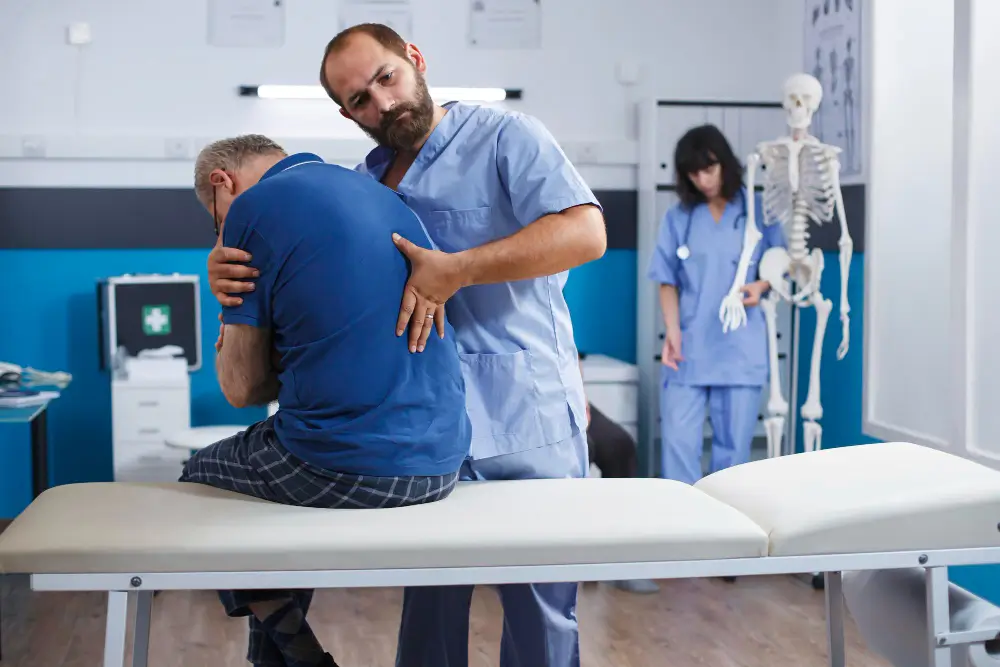
A spine surgeon evaluates a herniated disc to determine whether surgery is indicated. A herniated disc specialist in interventional pain management evaluates it to determine which non-surgical treatment will be most effective. For the majority of patients — even those with significant nerve compression — the interventional route produces equivalent or better long-term outcomes without the risks, recovery time, and cost of surgery. The best doctor for herniated disc treatment is the one who exhausts every effective non-surgical option first and recommends surgery only when it is genuinely necessary.
Accurate diagnosis is the foundation of every effective herniated disc treatment plan. A herniated disc diagnosis requires more than an MRI showing disc pathology — it requires a clinical specialist who can correlate the imaging finding with the patient’s specific pain pattern, neurological examination, and symptom history to determine whether that disc is truly responsible for the symptoms.
An MRI showing three herniated discs does not mean all three are causing your symptoms. Clinical correlation by a specialist is what identifies which level is responsible and therefore which treatment will work. Treating the wrong level is the most common reason herniated disc treatment fails.
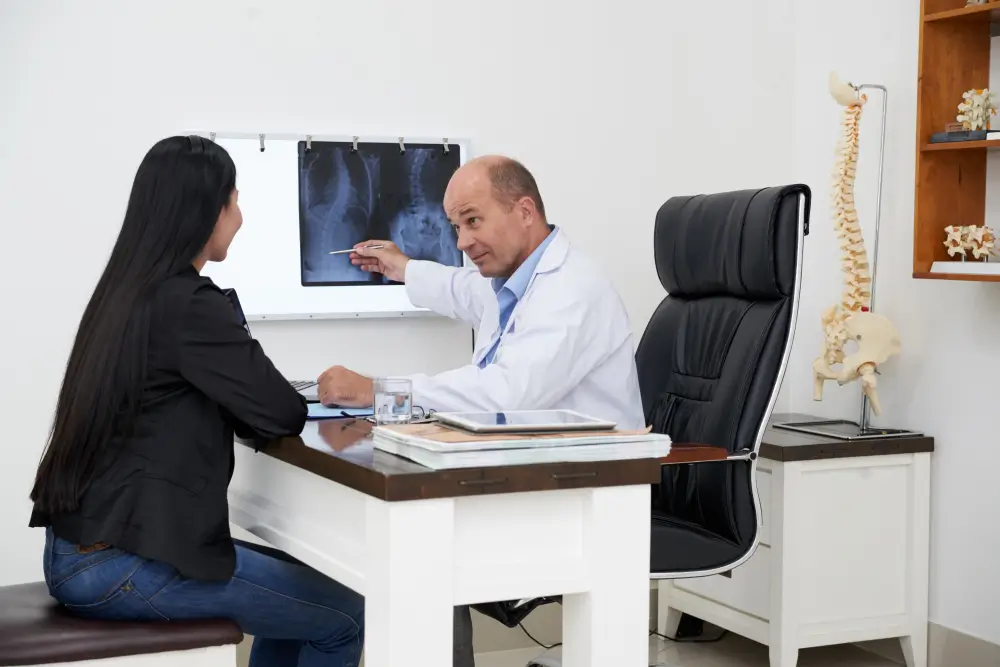
A herniated disc doesn’t always mean surgery. At WaPASS, treatment is structured to start with the least invasive option and progress only if needed — based on your symptoms, nerve involvement, and how much your daily life is affected.
If your symptoms are recent, the focus is on relieving pressure on the nerve and allowing natural recovery.
Many patients improve at this stage without needing procedures.
If symptoms persist beyond a few weeks or begin affecting strength or sensation, more targeted care is recommended.
If pain continues, especially with radiating leg or arm pain, simple treatments are often not enough.
At this stage, we use image-guided, targeted procedures that directly reduce nerve inflammation:
These treatments don’t just mask pain — they treat the source of nerve irritation.
Most WaPASS patients recover at this stage — without surgery.
If there is:
Then minimally invasive procedures may be considered:
These are not traditional open surgeries — they are designed for faster recovery and lower risk.
WaPASS provides specialist herniated disc treatment in Washington at five locations, making board-certified interventional care accessible across the state:
serving East King County, Kirkland, and Issaquah
serving Thurston County and South Puget Sound
serving Pierce County
serving Snohomish County and patients travelling from British Columbia
Yes — the majority of herniated discs resolve or become manageable without surgery. The disc material that has herniated is gradually reabsorbed by the body over time, and the nerve inflammation that causes the acute pain subsides as this happens. Nonsurgical herniated disc treatment — particularly epidural steroid injections — accelerates this process by directly reducing the nerve inflammation that makes the disc so painful. Most patients treated at WaPASS with an interventional approach never require an operation.
The best herniated disc treatment options depend on which disc is affected, how significantly it is compressing the nerve, and how long symptoms have been present. For acute disc herniation with nerve pain, epidural steroid injections at the affected level are the most evidence-supported first-line intervention. For cervical disc herniation with arm symptoms, selective nerve root blocks produce strong outcomes. For chronic or refractory cases, spinal cord stimulation provides longer-term relief. The key is accurate diagnosis first — herniated disc pain treatment matched to the wrong level is the most common reason treatment fails.
The best doctor for herniated disc treatment is a board-certified pain management specialist with fellowship training in interventional spinal procedures — not a surgeon evaluating operative candidacy. In Washington state, Dr. Praveen Mambalam at WaPASS is independently recognised as a top pain management physician by Seattle Magazine and Castle Connolly for five consecutive years. WaPASS provides herniated disc specialist Washington care at locations in Everett, Tukwila, Bellevue, Olympia, and Tacoma.
Epidural steroid injections for herniated disc pain typically produce noticeable improvement within 1 to 2 weeks of the procedure. Full relief often develops gradually over 3 to 4 weeks as disc inflammation continues to reduce. Relief from a single injection commonly lasts 6 weeks to several months. Patients with ongoing symptoms may benefit from a series of 2 to 3 injections over several months, combined with guided physical therapy. Your specialist will give you a specific timeline based on your disc level, severity, and treatment response.
Sciatica is the symptom — radiating leg pain caused by compression of the sciatic nerve. A herniated disc is one of the most common causes of sciatica, particularly when it occurs at the L4-L5 or L5-S1 levels in the lumbar spine and compresses the nerve roots that form the sciatic nerve. Not all sciatica is caused by a herniated disc — spinal stenosis, piriformis syndrome, and spondylolisthesis can also cause sciatica. And not all herniated discs cause sciatica — some herniate in directions that do not compress nerve roots. A herniated disc doctor maps the disc finding on imaging to the clinical pain pattern to determine the relationship.
The majority of herniated disc patients — including many with significant nerve compression and leg pain — do not need surgery when they receive appropriate interventional herniated disc treatment. Surgery is recommended by WaPASS only when: progressive motor weakness is occurring and not responding to interventional care; conservative and interventional options have been fully exhausted; imaging shows a severe structural compression that is unlikely to resolve without decompression; or bladder or bowel function is affected, which is a surgical emergency. For most patients, the answer to ‘will I need surgery?’ is no — with the right specialist and the right targeted treatment.
The hallmark of herniated disc pain is pain that radiates beyond the spine — into the leg (for lumbar disc herniation) or into the arm (for cervical disc herniation), often with accompanying numbness, tingling, or weakness in the limb. Pain that stays localised in the back without radiating into a limb is less likely to be from disc herniation and more likely from facet joints, muscles, or the SI joint. An MRI combined with a specialist clinical examination is the definitive way to diagnose a herniated disc and determine whether it is the source of your specific symptoms.

Dr. Praveen Mambalam has been named a Seattle Magazine Top Doctor in Pain Medicine for five consecutive years — 2020, 2021, 2022, 2023, 2025 and 2026— and has been recognised by Castle Connolly as a Top Doctor for over five years. With more than 15 years of experience in interventional pain management, he leads a practice that has treated over 18,000 patients across Washington state.
Dr. Ho Dzung brings dual board certification in Anesthesiology and Pain Medicine, with 15+ years of expertise in interventional and minimally invasive pain care. A former Las Vegas specialist and consultant, he has been recognised by Desert Companion, Vegas Seven, Modern Luxury Vegas, and Castle Connolly over a 10-year period.
Dual board-certified in Anesthesiology and Pain Medicine, Dr. Ho Dzung brings over 15 years of experience in interventional and minimally invasive pain care. With a background as a specialist and consultant in Las Vegas, he now serves the Pacific Northwest, focusing on personalized, patient-centered treatment approaches.
He is an experienced interventional pain specialist with over 15 years of expertise. He is board-certified in Anesthesiology and Pain Medicine and specializes in neuromodulation and minimally invasive treatments for chronic pain.