
Get expert care for Complex Regional Pain Syndrome with personalized, minimally invasive treatments focused on reducing nerve pain, improving mobility, and restoring quality of life.
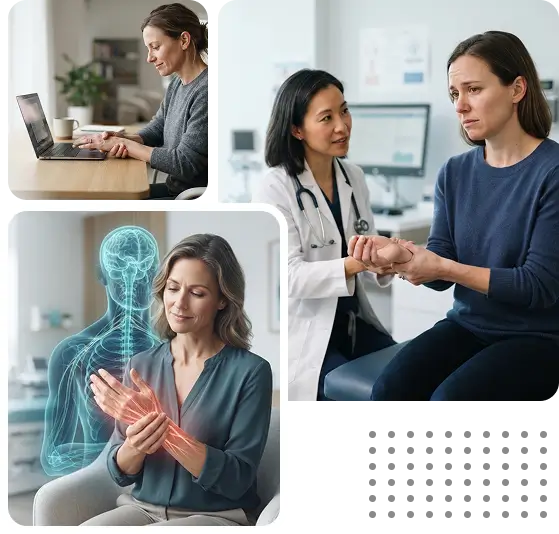
Complex Regional Pain Syndrome (CRPS) is a chronic neurological pain condition in which the nervous system generates severe, ongoing pain — most commonly in an arm or leg — that is profoundly disproportionate to any visible injury or tissue damage. Formerly called Reflex Sympathetic Dystrophy (RSD) or causalgia, it is characterised by burning pain, extreme sensitivity to touch, skin and temperature changes, and in progressive cases, motor dysfunction in the affected limb. CRPS is not imagined, not psychological, and not an overreaction — it is a real, measurable neurological condition with a growing evidence base for effective interventional treatment.
At Washington Pain and Spine Specialists (WaPASS), Dr. Praveen Mambalam provides specialist-level CRPS treatment in Washington — using the full range of interventional pain management tools including sympathetic nerve blocks, spinal cord stimulation, and targeted medication management. If you have been told there is nothing more that can be done, or if you are still waiting for a diagnosis that explains your symptoms, a specialist evaluation is the right next step.
Complex Regional Pain Syndrome is a chronic pain condition in which the nervous system becomes dysregulated following an injury, surgery, or immobilisation — generating pain signals that are far more intense and prolonged than the original event would warrant. The pain is typically confined to one limb and is often described as constant burning or electric pain combined with extreme sensitivity to touch, pressure, or temperature change.
There are two primary forms of CRPS:
Occurs without confirmed nerve damage and often develops after an injury or surgery.
Occurs after direct nerve injury and may involve more severe neurological symptoms.
If you are searching for a CRPS doctor in Washington, early evaluation is important to help prevent worsening symptoms and long-term complications.
Symptoms of CRPS can vary from person to person and may gradually worsen over time if left untreated.
Many patients experience symptoms that fluctuate in severity, with flare-ups triggered by stress, movement, or physical activity.
The exact cause of complex regional pain syndrome is not fully understood, but it is often linked to abnormal nerve responses following trauma or injury.
The condition may develop even after relatively minor injuries in some individuals.

Several factors may increase the risk of developing CRPS, including:
Early diagnosis by a CRPS specialist in Washington can help identify symptoms before the condition progresses.
There is no single test that confirms CRPS. Diagnosis typically involves a combination of medical history review, physical examination, and diagnostic testing. diagnostic evaluations may include:
A thorough diagnosis helps determine the severity of the condition and guides the most effective treatment approach.


Our experienced CRPS specialists in Washington provide comprehensive evaluations and advanced treatment options focused on helping patients regain comfort, mobility, and quality of life.
Treatment for Complex Regional Pain Syndrome focuses on reducing pain, restoring movement, and improving daily function. Because every patient experiences CRPS differently, treatment plans are often personalized.
Gentle guided exercises help improve movement, reduce stiffness, restore circulation, and prevent muscle weakness caused by limited use of the affected limb.
Occupational therapy helps patients regain the ability to perform daily activities while improving hand, arm, leg, or joint function safely.
Medications may help reduce nerve pain, inflammation, muscle spasms, and discomfort associated with Complex Regional Pain Syndrome.
Nerve blocks use targeted injections to interrupt abnormal pain signals and provide temporary relief from chronic CRPS pain symptoms.
These injections target the sympathetic nervous system to reduce burning pain, swelling, and sensitivity linked to CRPS.
Neuromodulation therapy uses electrical stimulation to modify pain signals before they reach the brain, helping reduce chronic pain symptoms.
Spinal cord stimulation delivers mild electrical impulses near the spinal cord to help block pain signals and improve daily comfort.
This therapy gradually exposes sensitive areas to different textures and sensations to help reduce pain sensitivity over time.
This therapy gradually exposes sensitive areas to different textures and sensations to help reduce pain sensitivity over time.
Peripheral nerve stimulation targets specific nerves with electrical impulses to help control chronic nerve-related pain symptoms.
Infusion therapy delivers medications directly into the bloodstream to help manage severe pain and improve nerve function.
Image-guided injections use advanced imaging technology to accurately deliver medication to painful nerves or affected areas.
Our CRPS specialists in Washington work closely with patients to determine the most appropriate treatment strategy based on individual symptoms and response to care.
CRPS can become long-term in some patients, but early treatment may help improve symptoms and prevent progression.
Some mild cases improve over time, but many patients require medical treatment and rehabilitation to manage symptoms effectively.
CRPS Type 1 occurs without confirmed nerve injury, while Type 2 involves direct nerve damage.
In some cases, symptoms may spread to other limbs or body regions over time.
Most treatments are designed to gradually reduce pain and improve tolerance to movement and physical activity.
Yes. Physical therapy is often an important part of improving mobility, circulation, and overall function.

Dr. Praveen Mambalam has been named a Seattle Magazine Top Doctor in Pain Medicine for five consecutive years — 2020, 2021, 2022, 2023, 2025 and 2026— and has been recognised by Castle Connolly as a Top Doctor for over five years. With more than 15 years of experience in interventional pain management, he leads a practice that has treated over 18,000 patients across Washington state.
Dr. Ho Dzung brings dual board certification in Anesthesiology and Pain Medicine, with 15+ years of expertise in interventional and minimally invasive pain care. A former Las Vegas specialist and consultant, he has been recognised by Desert Companion, Vegas Seven, Modern Luxury Vegas, and Castle Connolly over a 10-year period.
Dual board-certified in Anesthesiology and Pain Medicine, Dr. Ho Dzung brings over 15 years of experience in interventional and minimally invasive pain care. With a background as a specialist and consultant in Las Vegas, he now serves the Pacific Northwest, focusing on personalized, patient-centered treatment approaches.
He is an experienced interventional pain specialist with over 15 years of expertise. He is board-certified in Anesthesiology and Pain Medicine and specializes in neuromodulation and minimally invasive treatments for chronic pain.