

Nerve pain in the head and neck can feel very different from an ordinary headache. You may experience sharp, stabbing, burning, shooting, or electric-like pain that comes and goes or follows a particular path. In some cases, the discomfort may begin in the neck and travel toward the back, side, or top of the head.
There are several possible causes of nerve pain in the head and neck, including irritated or compressed nerves, neck problems, muscle tension, previous injuries, and conditions affecting the cervical spine or nerves around the head.
Understanding what the pain feels like, where it starts, and what triggers it can help your doctor determine whether the symptoms may be related to a nerve, the neck, surrounding muscles, or another condition.
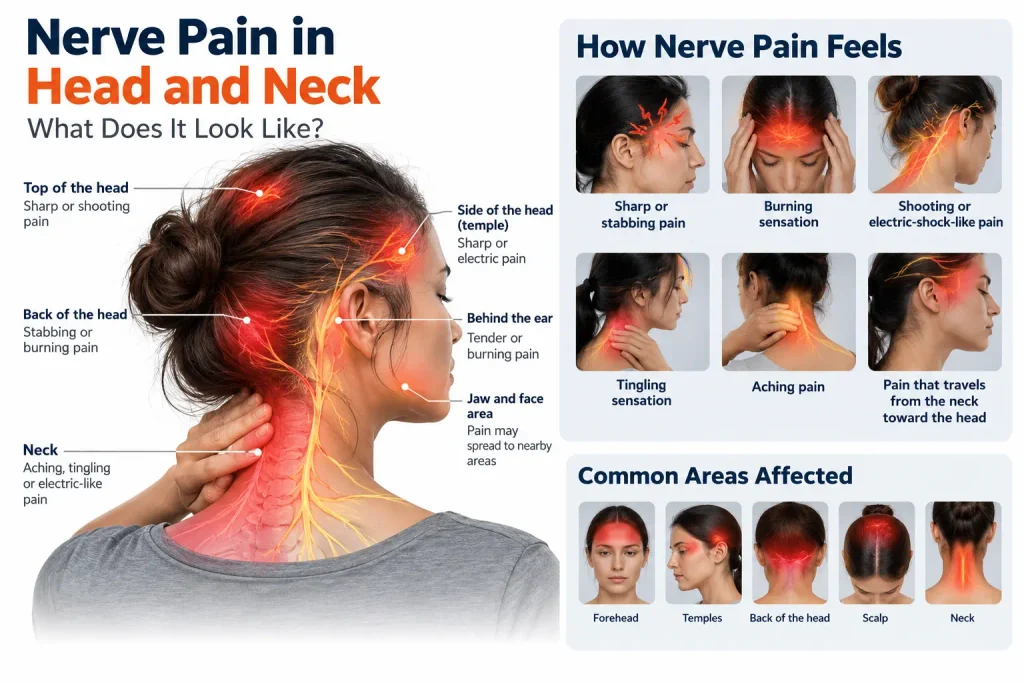
What Does Nerve Pain in the Head and Neck Feel Like?
Nerve-related pain does not always feel like a typical headache. Its quality and location can vary depending on which nerve or structure is involved.
Nerve pain in the head and neck may feel like:
- Sharp or stabbing pain
- Burning or tingling sensations
- Shooting or electric-shock-like pain
- Sudden jolts of pain
- Pain that follows a particular path
- Increased sensitivity to touch
- Pain that starts in the neck and travels toward the head
- Pain that occurs on one side of the head or neck
If you are wondering what does nerve pain in the head feel like, it may be described as a sudden jolt, stabbing sensation, burning discomfort, or persistent aching. Some people experience short episodes of intense pain, while others have symptoms that last longer.
Certain movements may also trigger or worsen the pain. For example, turning your neck, maintaining the same position for a long time, or putting pressure on a sensitive area may increase symptoms.
What Causes Nerve Pain in the Head and Neck?
There are several possible causes of nerve pain in the head and neck. The source may be within the neck, around the nerves that travel into the scalp, or related to another condition affecting the head and neck.
Irritated or Compressed Nerves
When a nerve becomes irritated or compressed, it can send abnormal pain signals. Depending on the nerve involved, symptoms may occur in the neck, back of the head, scalp, or other areas.
Neck Problems
Problems involving the cervical spine, joints, discs, muscles, or surrounding tissues can sometimes contribute to nerve-related symptoms. This may cause nerve pain in the neck that extends toward the head.
Neck-related pain may become more noticeable with certain movements or after sitting, working, driving, or sleeping in one position for an extended period.
Muscle Tension or Spasms
Tight muscles in the neck and upper back can place stress on surrounding structures and may contribute to head and neck pain. Muscle tension or spasms may occur alongside nerve irritation and can sometimes make existing symptoms more noticeable.
Injury or Trauma
An injury to the head, neck, or upper spine can irritate or damage nearby nerves and lead to sharp, burning, or shooting pain. This may happen after a car accident, fall, sports injury, or other trauma. If your symptoms started after a collision, car accident injury pain management can help address persistent nerve, neck, and related pain.
Occipital Nerve Irritation
The occipital nerves travel from the upper neck toward the back and sides of the head. When these nerves become irritated, they can produce pain around the upper neck, back of the head, scalp, or behind the ears.
Can Neck Problems Cause Nerve Pain in the Head?
Yes. Certain problems affecting the neck can contribute to pain felt in the head.
Neck problems can sometimes contribute to nerve pain in the head. Conditions affecting the cervical spine, muscles, joints, or nearby nerves may cause pain that travels from the neck toward the back, side, or top of the head.
You may notice pain from neck to head when turning your head, looking up or down, maintaining the same position for a long time, or putting strain on your neck. Irritated nerves in the cervical region can sometimes produce sharp, shooting, burning, or electric-like sensations that extend beyond the neck.
If you also experience pain when moving your neck, especially when turning your head from side to side, learn more about neck pain when turning your head left or right and what may be causing it.
Neck-related nerve pain can have different causes, so identifying where the pain begins, what triggers it, and whether you have other symptoms can help your doctor determine the appropriate treatment.
If your symptoms are mainly related to an underlying neck problem, appropriate neck pain treatment may help address the source of the pain and reduce symptoms that extend into the head.
You may notice symptoms when:
- Turning or moving your neck
- Looking up or down
- Sitting in one position for a long time
- Performing activities that strain the neck
- Pressing around a sensitive area of the neck
However, neck-related pain is not the only possible explanation for head pain. A medical evaluation can help determine whether the neck, nerves, muscles, or another source may be contributing to your symptoms.
Why Does Pain Travel From the Neck to the Head?
Pain does not always occur exactly where the underlying problem begins.
The upper neck contains nerves and other structures that share connections with pain pathways involving the head. When these structures become irritated, the brain may perceive pain in another area.
This can explain why pain from neck to head sometimes feels as though it is traveling upward.
The pattern of your symptoms can provide useful information. Your doctor may ask:
- Where does the pain begin?
- Where does it travel?
- Does it affect one or both sides?
- What does the pain feel like?
- What triggers or worsens it?
- Does moving your neck change the symptoms?
- Are there other symptoms, such as tingling or sensitivity?
These details can help narrow down the possible source of the pain.
Nerve Pain in the Head vs. Other Types of Headaches
Nerve-related head pain can sometimes be confused with a typical headache. Although symptoms can overlap, the quality and pattern of the pain may be different.
| Type of pain | How it may feel |
| Nerve-related pain | Sharp, stabbing, burning, shooting, or electric |
| Tension headache | Pressure, tightness, or dull aching |
| Migraine | Moderate to severe throbbing or pulsing pain, sometimes with nausea or sensitivity to light and sound |
| Neck-related headache | Head pain associated with problems or movement in the neck |
Some people use the term nerve headache to describe sharp or shooting head pain. However, “nerve headache” is not a diagnosis by itself. The underlying cause needs to be determined based on the symptoms and examination.
How Is Nerve Pain in the Head and Neck Diagnosed?
There is no single test that identifies every type of nerve-related head and neck pain. Diagnosis generally begins with understanding your symptoms, medical history, and previous injuries or conditions.
During an evaluation, your doctor may ask about:
- Where the pain starts and where it travels
- Whether the pain is sharp, burning, stabbing, or aching
- How frequently the symptoms occur
- How long episodes last
- Whether neck movement changes the pain
- Previous accidents, falls, or injuries
- Other symptoms occurring with the pain
- Treatments you have already tried
A physical examination may evaluate your neck movement, strength, sensation, tenderness, and other relevant findings.
Depending on your symptoms, your doctor may review existing imaging or recommend additional testing when appropriate. The goal is to identify the potential source of the pain rather than simply treat the location where you feel it.
Nerve Pain in the Head and Neck Treatment Options
Treatment depends on the underlying cause, severity, duration, and pattern of your symptoms. There is no single nerve pain in head treatment that works for everyone.
Depending on the cause, treatment may include conservative care, medication management, physical therapy, injections, or other minimally invasive approaches.
Medication Management
Medications may be considered depending on the type and severity of your symptoms. Your doctor can determine whether medication is appropriate based on your medical history, other medications, and suspected cause of the pain.
Physical Therapy
When neck problems, muscle tension, posture, or movement contribute to symptoms, physical therapy may help improve mobility, strength, and function.
Treatment may focus on the neck, shoulders, posture, and movement patterns based on your individual symptoms.
Nerve Blocks
A targeted nerve block may be considered when a specific nerve is suspected of contributing to your pain. Medication is placed near the targeted nerve with the goal of reducing pain signals.
In some situations, a nerve block may also provide useful diagnostic information by showing whether a particular nerve is contributing to the symptoms.
Occipital Nerve Blocks
For selected patients whose symptoms appear to involve the occipital nerves, an occipital nerve block may be considered.
This procedure targets the nerves that travel from the upper neck toward the back of the head and may be used as part of a broader treatment plan.
Trigger Point Injections
When specific muscles contribute to head and neck pain, trigger point injections may be considered in appropriate cases. These injections target painful or tight areas of muscle.
Other Minimally Invasive Treatments
Depending on the underlying condition, other minimally invasive pain-management procedures may be appropriate.
The right treatment depends on what is causing the pain rather than simply where the pain is felt.
Can Nerve Pain in the Head and Neck Go Away on Its Own?
Some temporary nerve irritation may improve as the underlying problem settles. However, recurring or persistent nerve pain should not be ignored.
If symptoms continue, become more frequent, or interfere with sleep, work, exercise, or daily activities, an evaluation can help determine what may be causing the pain and whether treatment is appropriate.
When Should You See a Head Pain Specialist in Everett?
Not every headache requires specialist care. However, persistent or recurring symptoms that feel different from your usual headaches may warrant evaluation.
Consider speaking with a head pain specialist if:
- Your pain keeps returning
- You experience frequent shooting or burning sensations
- Pain travels from your neck into your head
- Symptoms are becoming more frequent or severe
- Neck movement makes the symptoms worse
- Pain interferes with sleep or daily activities
- Previous treatments have not provided adequate relief
- You are unsure what is causing your symptoms
A head pain doctor can evaluate the pattern of your symptoms and determine whether the pain may be related to nerves, the cervical spine, muscles, or another condition.
When Does Head and Neck Pain Require Urgent Medical Attention?
Some types of head and neck pain require prompt medical evaluation.
Seek urgent medical attention for a sudden, severe headache that is different from previous headaches, particularly if it occurs with symptoms such as:
- Weakness or numbness
- Difficulty speaking
- Confusion
- Loss of consciousness
- Significant vision changes
- Fever with severe headache or neck stiffness
- Severe pain following a significant head or neck injury
These symptoms can have causes that require immediate medical assessment.
Dr. Praveen Mambalam and Dr. Ho Dzung help patients experiencing persistent head and neck pain identify the underlying cause of their symptoms and explore appropriate treatment options. At Washington Pain and Spine Specialists, our pain management physician in Everett provide personalized pain management approaches, including medication management, nerve blocks, and minimally invasive treatments, to help patients find relief and improve their quality of life.
Frequently Asked Questions About Nerve Pain in the Head and Neck
What does nerve pain in the head feel like?
Nerve-related head pain may feel sharp, burning, shooting, stabbing, or electric. Some people experience brief jolts of pain, while others have ongoing burning or aching discomfort.
Can a pinched nerve cause pain in the head?
Certain irritated or compressed nerves in the neck can contribute to pain that travels toward the head. However, head pain can have many possible causes, so an evaluation is needed to determine the source.
Can neck problems cause nerve pain in the head?
Yes. Problems involving the cervical spine, muscles, joints, or nerves can sometimes contribute to pain that travels from the neck toward the head.
Why does pain travel from my neck to my head?
The upper neck contains nerves and other structures that can contribute to pain felt in the head. Irritation in this area can sometimes produce pain that travels upward from the neck.
Is nerve pain in the head the same as a headache?
Not necessarily. Nerve-related pain may have a sharp, burning, shooting, or electric quality, while other headaches may feel like pressure, throbbing, or a dull ache. Different conditions can also produce overlapping symptoms.
What causes nerve pain in the head and neck?
Possible causes include irritated or compressed nerves, neck problems, muscle tension, injuries, occipital nerve irritation, and other conditions affecting the upper cervical region.
Can nerve pain in the head and neck be treated without surgery?
In some cases, yes. Depending on the cause, treatment may include medication management, physical therapy, nerve blocks, trigger point injections, and other minimally invasive approaches.
How is nerve pain in the head and neck treated?
Treatment depends on the underlying cause. A nerve pain in head treatment plan may include medication, physical therapy, nerve blocks, trigger point injections, or other minimally invasive treatments when appropriate.