Car accidents happen in an instant, but the impact on your back can last much longer. Whether it’s a minor fender-bender or a serious collision, your spine and back muscles are vulnerable to injury. The problem? Not all back injuries are obvious immediately. Some develop over days or weeks, and without proper treatment, they can become chronic problems that affect your quality of life.
In this guide, we’ll walk through the most common back injuries caused by car accidents and explain why seeking professional medical help is critical for each one.
1. Whiplash and Cervical Strain
What It Is
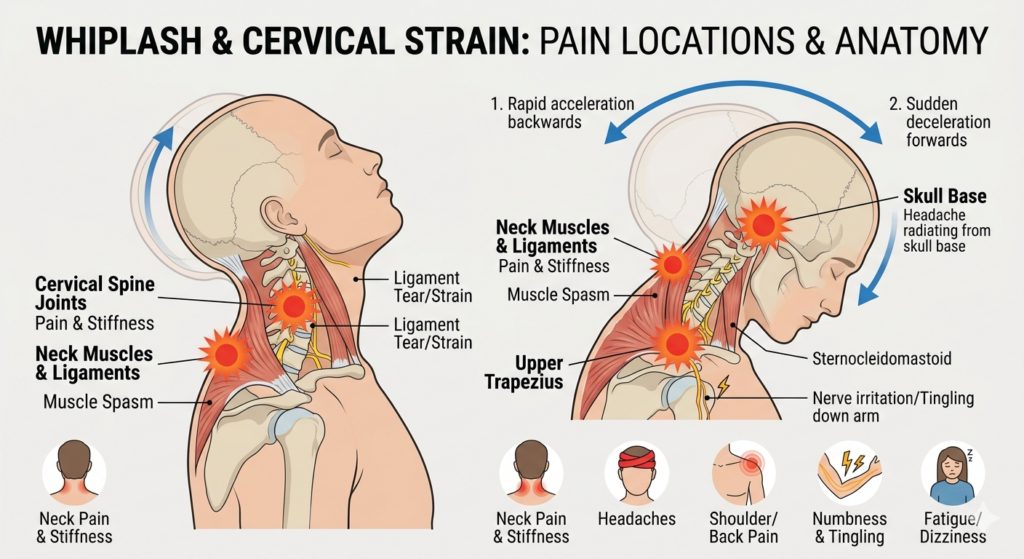
Whiplash is one of the most common car accident injuries. It occurs when your head suddenly jerks forward and then backward (or vice versa), causing rapid movement of the cervical spine (your neck and upper back). This violent motion stretches and tears the soft tissues—muscles, ligaments, and tendons—in your neck and upper back.
Symptoms to Watch For
• Neck stiffness and pain
• Headaches (often starting at the base of the skull)
• Shoulder and upper back pain
• Tingling or numbness in arms and hands
• Dizziness or difficulty concentrating
• Fatigue
Why You Need Professional Care
Whiplash can seem minor at first, but it can lead to chronic pain if left untreated. A healthcare provider can:
– Use imaging (X-rays or MRI) to rule out fractures or nerve damage
– Create a targeted treatment plan that may include physical therapy, pain management, or other therapies
– Prevent long-term complications like chronic headaches or persistent neck pain Don’t assume you’re fine just because you “feel okay” right after the accident.Many whiplash injuries develop symptoms 24-48 hours later.
2. Herniated or Slipped Disc
What It Is
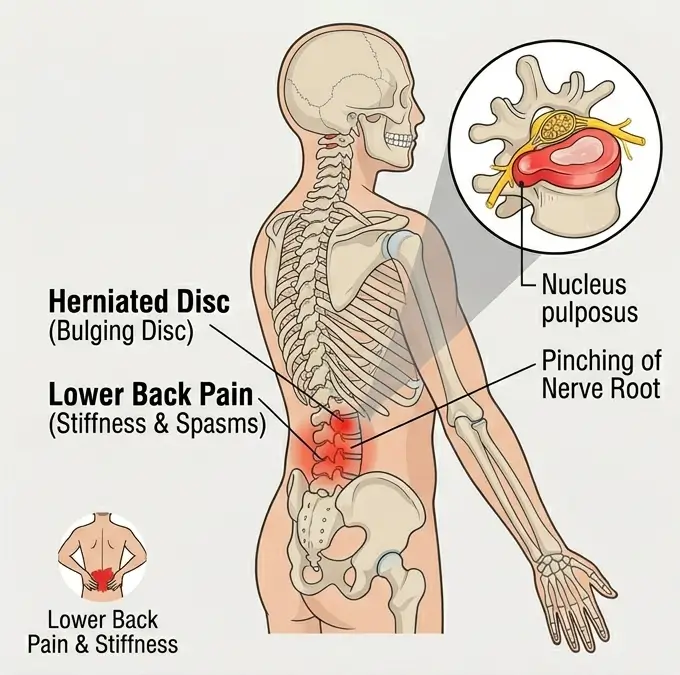
Your spine is made up of vertebrae separated by discs, soft, gel-like cushions that absorb shock. A car accident can cause the inner material of a disc to bulge or rupture through the outer layer, pressing on nearby nerves. This is called a herniated disc (also known as a slipped disc).
Symptoms to Watch For
• Sharp or burning pain in the lower back, middle back, or neck
• Pain radiating down one or both legs (sciatica)
• Numbness or tingling in the legs or feet
• Weakness in legs or feet
• Pain that worsens with certain movements (bending, twisting)
• Difficulty standing or walking for extended periods
Why You Need Professional Care
Herniated discs can be serious and may require different treatment approaches depending on severity. A medical professional can: – Confirm the diagnosis with imaging (MRI or CT scan) – Determine if the herniation is pressing on nerves – Recommend treatment ranging from conservative (physical therapy, rest) to surgical intervention – Prevent permanent nerve damage if surgery is needed Early intervention is key. Some people manage herniated discs without surgery, but without proper diagnosis and treatment, symptoms can worsen significantly.
3. Lumbar Strain (Lower Back Strain)
What It Is
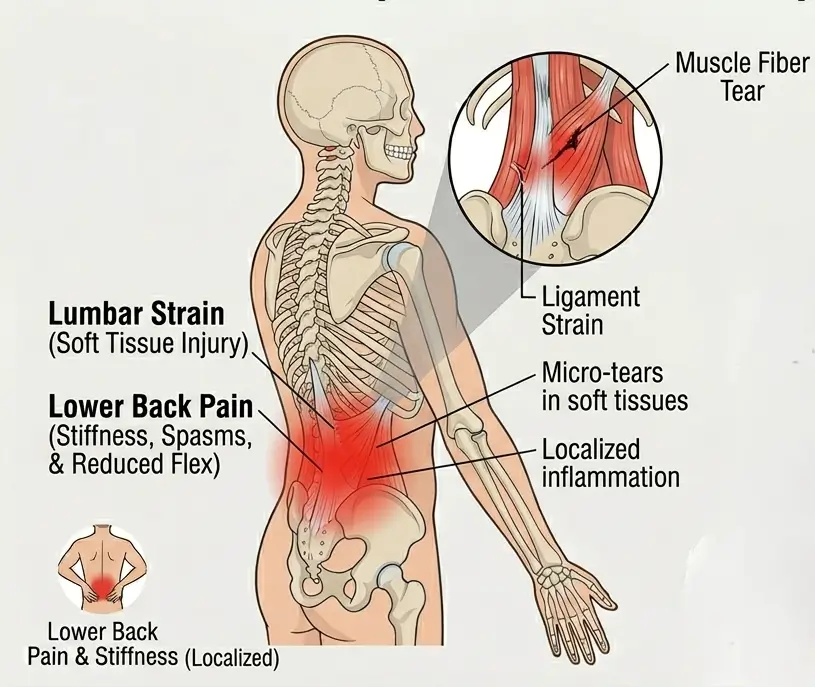
Lumbar strain is a stretch or tear in the muscles and ligaments of the lower back. During a car accident, the sudden impact forces your spine and surrounding muscles to absorb tremendous force, sometimes beyond what they can handle. This causes micro-tears in the muscle fibers and ligament tissue.
Symptoms to Watch For
• Lower back pain (mild to severe)
• Muscle stiffness, especially after sitting or sleeping
• Reduced flexibility and difficulty bending
• Muscle spasms or cramping
• Pain that worsens with activity and improves with rest
• Localized swelling or bruising
Why You Need Professional Care
While some lumbar strains can heal with conservative treatment, professional care helps: – Rule out more serious injuries (fractures, herniated discs) – Develop a rehabilitation plan to restore strength and flexibility – Prevent chronic pain and muscle weakness – Address underlying posture or alignment issues that may have contributed to the injury
4. Fractures and Compression Injuries
What It Is
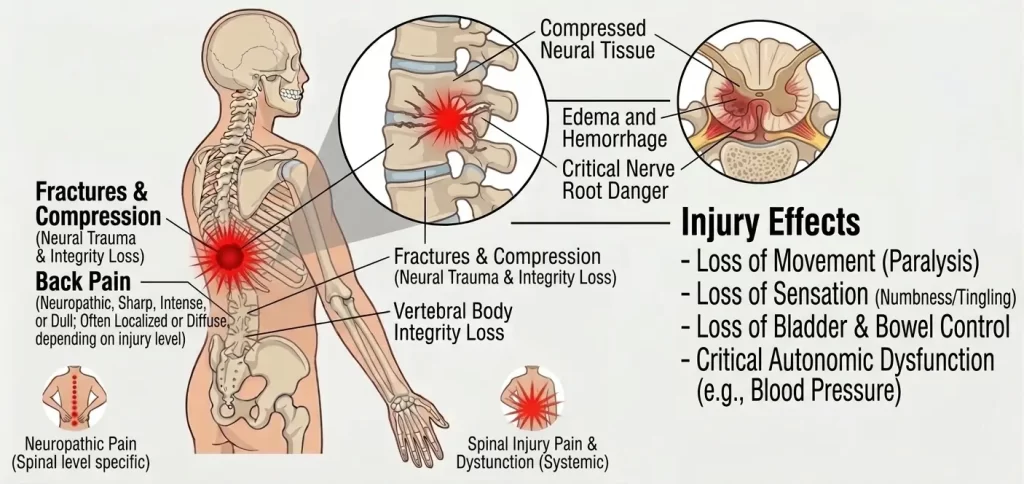
In more serious accidents, your vertebrae (the bones that make up your spine) can fracture or compress. These injuries range from hairline cracks to severe breaks that can affect your ability to move or feel sensation.
Symptoms to Watch For
- Severe back pain immediately after the accident
- Visible deformity or swelling
- Loss of sensation or paralysis
- Difficulty controlling bladder or bowel function
- Radiating pain down the legs
- Weakness or instability when standing or walking
Why You Need Professional Care
Fractures and compression injuries are serious and require immediate medical attention. Without proper diagnosis and treatment: – You risk further damage or displacement of bone fragments – Nerve damage can become permanent – Spinal cord injury could lead to partial or complete paralysis – Complications may develop that are irreversible
Imaging (X-rays, CT scans, or MRI) is essential to determine the severity and appropriate treatment.
5. Facet Joint Syndrome
What It Is
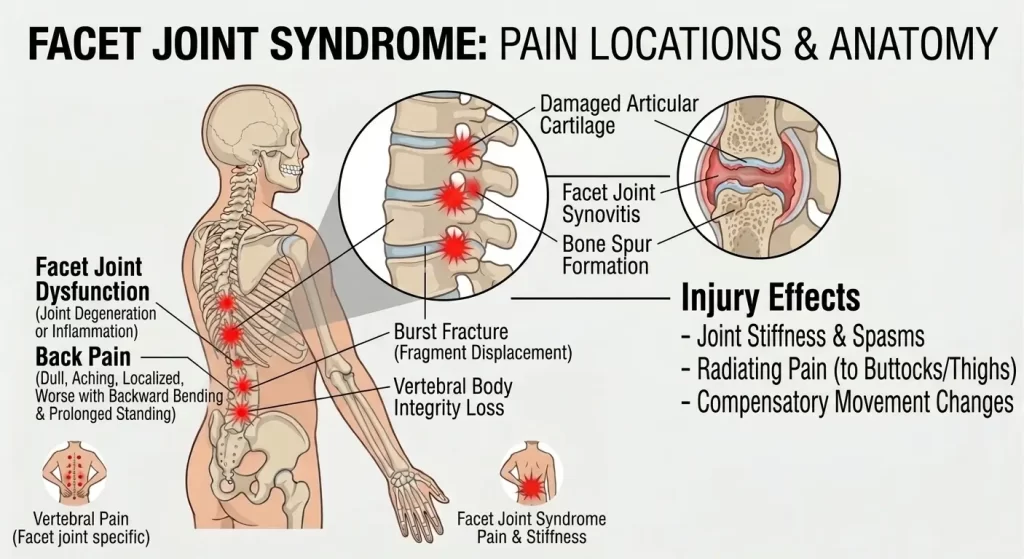
Facet joints are small joints located between the vertebrae that allow your spine to bend and twist. A car accident can cause these joints to become inflamed or damaged, leading to pain and stiffness.
Symptoms to Watch For
• Pain localized to the middle or lower back
• Pain that worsens with backward bending or twisting
• Stiffness that improves with movement or heat
• Pain that radiates to the buttocks or back of the thighs
• Muscle spasms near the affected joint
Why You Need Professional Care
A healthcare provider can: – Use physical examination and imaging to diagnose facet joint problems – Recommend conservative treatments like physical therapy or anti-inflammatory medications – Consider more advanced options (like injections or other interventions) if needed – Help you avoid compensatory movement patterns that lead to additional injury
6. Spinal Cord Injury
What It Is
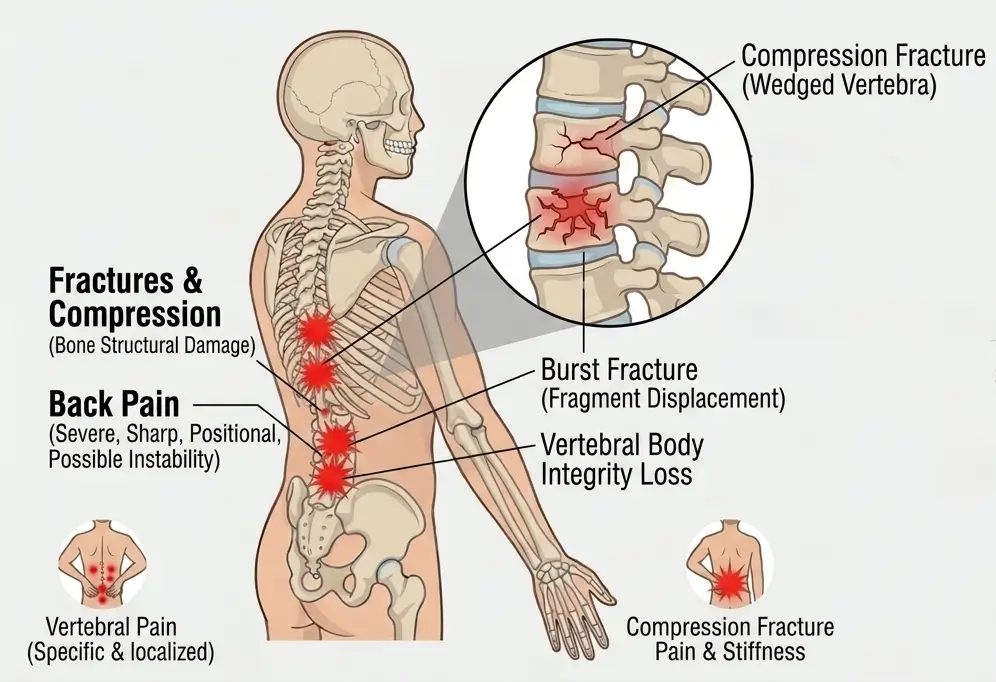
In severe car accidents, the spinal cord itself—the bundle of nerves that carries signals between your brain and body—can be damaged. This is one of the most serious types of back injuries.
Symptoms to Watch For
• Complete or partial loss of sensation below the injury site
• Loss of motor function or paralysis
• Loss of bladder or bowel control
• Difficulty breathing (if cervical spine is affected)
• Severe pain at or below the site of injury
• Tingling or electric shock sensations
Why You Need Professional Care
Spinal cord injuries require immediate emergency medical care. Without proper treatment: – You risk permanent paralysis or loss of function – Complications like blood clots, infections, or respiratory failure can develop – Rehabilitation opportunities may be missed
Time is critical with spinal cord injuries. If you suspect one, call 911 immediately.
The Bottom Line: Don’t Wait to Seek Help
The temptation after a car accident is to “tough it out” and see if the pain goes away on its own. Don’t do this. Here’s why:
• Early diagnosis prevents complications: Many serious back injuries worsen without treatment
• Treatment is more effective early: The sooner you start, the better your outcomes typically are
• You protect yourself legally and financially: Medical records documenting your injuries are crucial for insurance claims
• Chronic pain is preventable: With proper care, many acute injuries don’t become long-term problems
Even if you feel fine after an accident, some injuries take days or weeks to manifest. It’s always better to get checked out and be told you’re okay than to ignore symptoms and face chronic problems later.
When to Seek Emergency Care Immediately
Go to the emergency room right away if you experience: – Severe pain or inability to move – Loss of sensation or paralysis – Loss of bladder or bowel control – Difficulty breathing – Severe headache with neck pain – Numbness or tingling in both legs – Unconsciousness or confusion
Final Thoughts
Car accident back injuries can range from minor strains that heal with rest to serious spinal cord damage that requires immediate surgery. The key is getting a professional medical evaluation as soon as possible. Your doctor can determine what type of injury you have and create a treatment plan that gives you the best chance of a full recovery.
Don’t let embarrassment, fear, or denial prevent you from getting the care you need. Your back supports your entire body—take care of it, and it will take care of you.
If you’ve been in a car accident, schedule a medical appointment today. Your future self will thank you.
Disclaimer: This blog post is for informational purposes only and should not be considered medical advice. Always consult with a qualified healthcare professional for diagnosis and treatment of back injuries.