

Wrist pain is most commonly caused by overuse, tendon inflammation, arthritis, nerve compression (like carpal tunnel syndrome), or sudden injuries such as sprains. Pain on the thumb side is often due to De Quervain’s tendonitis, while sudden wrist pain without injury may result from irritation, inflammation, or early arthritis. Treatment depends on the cause and may include rest, braces, pain relievers, steroid injections, or minimally invasive procedures.
Understanding the causes of wrist pain is the first step toward finding effective relief and preventing long-term damage.
Common Causes Of Wrist Pain
1. Overuse and Repetitive Strain
Typing, texting, gaming, lifting, and repetitive hand movements including sports injury during activities like tennis, badminton, cricket, golf, or weight training can strain the wrist tendons and soft tissues. Over time, this repetitive micro-stress causes inflammation and discomfort.
Symptoms include:
- Mild pain that worsens with activity
- Tightness or stiffness
- Weak grip strength
Repeated strain is one of the leading causes of wrist pain among office workers and manual laborers.
2. Tendon Inflammation (Wrist Tendonitis)
Tendonitis occurs when the wrist tendons become irritated from overuse or improper movement. It often leads to:
- Pain with bending or rotating the wrist
- Swelling
- Tenderness along the tendon
If untreated, wrist tendonitis can become chronic and limit mobility.
3. Wrist Pain on the Thumb Side (De Quervain’s Tendonitis)
Pain on the thumb side of the wrist usually indicates De Quervain’s Tendonitis, a condition affecting the tendons at the base of the thumb.
You may notice:
- Pain when gripping or lifting
- Discomfort when rotating the wrist
- Swelling along the thumb side
This is one of the most common thumb-side wrist pain conditions.
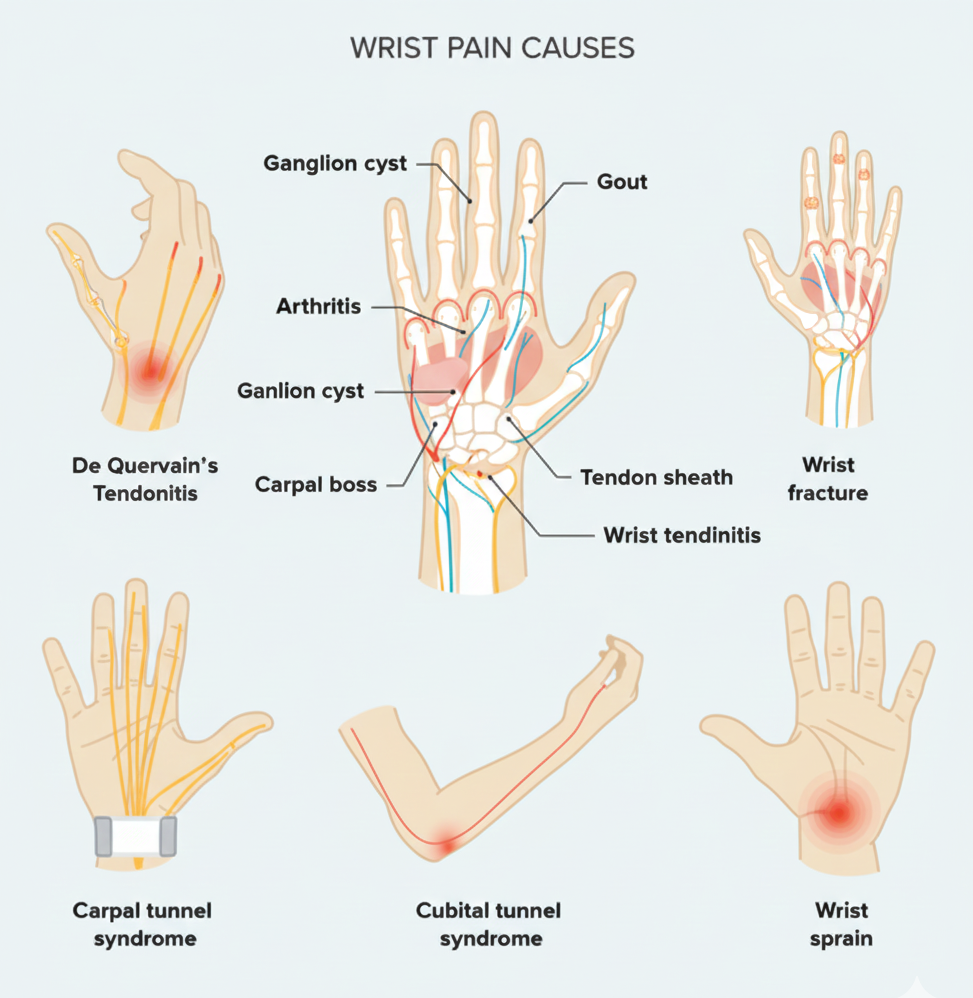
4. Nerve Compression Issues
Nerves running through the wrist can become compressed from inflammation or repetitive strain.
Common symptoms include:
- Tingling or numbness
- Hand weakness
- Nighttime wrist pain
- Pain radiating into the hand or forearm
If nerve compression is suspected, treatments like nerve blocks or minimally invasive procedures may be recommended.
5. Sudden Wrist Pain Without Injury
It’s possible to develop sudden pain even without falling or twisting the wrist.
Possible reasons include:
- Triggered inflammation
- Irritated tendons
- Ganglion cyst
- Early arthritis
- Nerve irritation
This unexpected pain is common and often related to inflammation rather than trauma.
6. Wrist Sprains and Minor Trauma
A wrist sprain happens when the ligaments stretch too far or tear slightly often from lifting something wrong, slipping, twisting the hand or even car accidents injuries where the wrist absorbs force during impact or bracing against the steering wheel.
Symptoms include:
- Sharp pain
- Swelling
- Bruising
- Difficulty moving the wrist
7. Arthritis or Joint Degeneration
Both osteoarthritis and rheumatoid arthritis can impact the wrist joint, causing:
- Morning stiffness
- Swelling
- Grinding sensation
- Persistent pain
Early treatment helps slow joint degeneration and maintain mobility.
How Wrist Pain Is Diagnosed
To understand the reason of wrist pain, a specialist may perform or may order:
- Physical examination
- X-rays to check for bone/joint issues
- Ultrasound to examine tendons
- MRI for detailed tissue evaluation
- Nerve conduction studies (if numbness or tingling is present)
Accurate diagnosis is important to choose the right treatment plan and prevent long-term issues.
Treatment Options for Wrist Pain
Treatment depends on the underlying cause but may include the following:
Rest
Resting the wrist helps reduce irritation from repetitive movements and overuse. Taking short breaks during typing, lifting, or gripping can ease wrist pain and prevent inflammation from worsening, especially in cases of tendonitis or sudden wrist pain.
Ice for Swelling
Applying ice helps reduce swelling and calm irritated wrist tissues. Ice packs are especially useful for sudden wrist pain without injury, sprains, and tendon flare-ups. Use for 10–15 minutes to relieve pain and control inflammation effectively.
Heat for Stiffness
Heat therapy improves blood flow and relaxes stiff wrist muscles. It’s helpful for morning stiffness, arthritis, and wrist pain caused by overuse. Warm compresses or heat pads can ease discomfort and support better flexibility throughout the day.
Wrist Braces
A wrist brace supports the joint, reduces movement, and helps relieve pain during daily tasks. Bracing is especially helpful for tendonitis, thumb-side wrist pain, and nerve-related issues like carpal tunnel, offering stability while the wrist heals.
Gentle Stretching
Gentle wrist stretches can loosen tight tendons and reduce pain caused by overuse or stiffness. Stretching improves mobility, supports tendon healing, and helps manage wrist pain from typing, lifting, or repetitive movements throughout the day.
Ergonomic Changes
Small ergonomic adjustments like correct keyboard height, proper mouse support, or improved hand posture can significantly reduce wrist pain from daily repetitive tasks. These changes help prevent tendon irritation and nerve compression at work.
Pain Relievers and Anti-Inflammatory Medication
Over-the-counter pain relievers and anti-inflammatory medications can help reduce wrist pain, swelling, and stiffness especially during flare-ups from overuse or tendon irritation. They offer short-term relief, but long-term use should be guided by a specialist.
But home remedies like rest, ice, heat, braces, and ergonomic changes can ease wrist pain within a few days, especially when the discomfort is mild or caused by temporary strain. Most people notice improvement in 3–7 days, but if the pain returns, worsens, or does not improve after a week, it may indicate a deeper issue involving the tendons, nerves, or joints.
This is where a Pain Management Specialist plays an important role. They can identify the exact cause of wrist pain, prevent it from becoming chronic, and recommend targeted treatments to relieve symptoms faster and more effectively.
Medical Treatment Options
When wrist pain does not improve with rest or self-care, medical treatments can provide more precise and long-lasting relief. Depending on the underlying cause such as tendon inflammation, nerve compression, or arthritis your specialist may recommend one or more of the following options:
1. Physical Therapy
Physical therapy helps improve wrist strength, mobility, and function. Targeted exercises reduce stiffness and support healing from tendonitis, overuse injuries, and nerve-related pain. It’s often the first recommended step for long-term recovery.
2.Nerve Blocks
Nerve blocks target pain caused by nerve compression, such as carpal tunnel or irritation from repetitive movements. By calming inflamed nerves, they provide significant symptom relief and help diagnose the exact source of wrist pain.
3.Minimally Invasive Procedures
Minimally invasive procedures are used when wrist pain becomes chronic or nerve compression persists. These treatments reduce inflammation, release pressure on nerves, and restore function with little downtime, helping patients return to normal activity sooner.
4.Surgery
Surgery is recommended only when all other treatments fail or when severe structural problems are detected. It may involve repairing ligaments, releasing compressed nerves, or removing cysts to restore wrist stability and reduce persistent pain.
When to See a Pain Management Specialist
Seek medical care if you experience:
- Wrist pain lasting longer than 1–2 weeks
- Tingling, numbness, or burning sensations
- Persistent swelling, warmth, or visible changes
- Sudden sharp pain that doesn’t improve
- Wrist pain interfering with daily activities or work
Final Thoughts
Wrist pain is common but understanding its cause is the key to proper treatment. Whether it comes from overuse, tendon inflammation, thumb-side irritation, nerve compression, or sudden pain without injury, early evaluation helps protect long-term wrist health.
If wrist pain is affecting your work, daily routine, or sleep, consulting a pain management specialist can help you find lasting relief.
Disclaimer: The information provided in this article is for educational and informational purposes only and is not a substitute for professional medical advice, diagnosis, or treatment. Always seek the advice of your physician or qualified healthcare provider regarding any medical condition or treatment options.